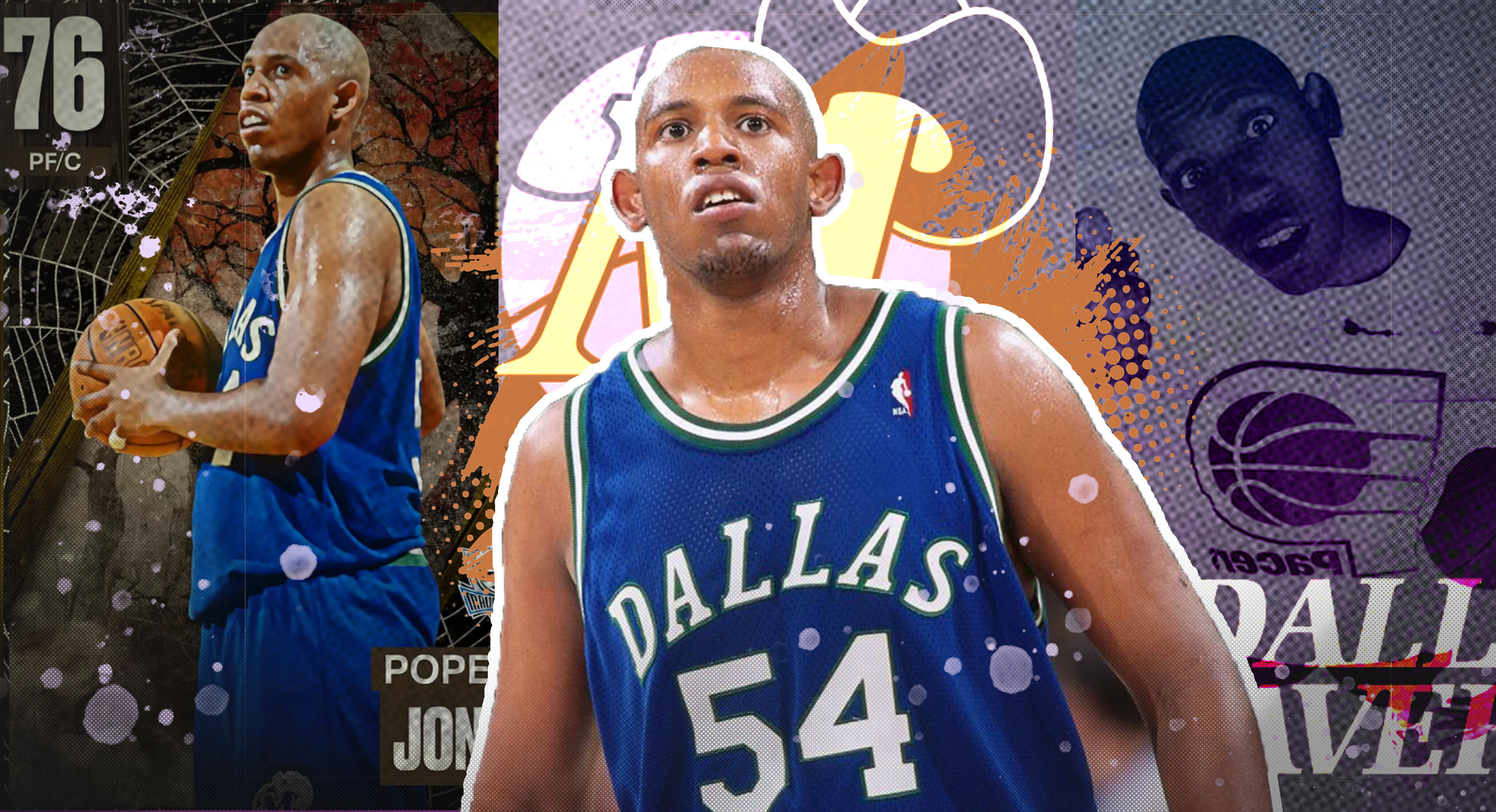
Across rebuilds, expansion years, injuries and trades, Popeye Jones’s career became a quiet case study in how little control an NBA role player can have over his own timing
In 11 NBA seasons, Popeye Jones never played a single playoff minute.
That alone would be enough to make his career unusual. But the stranger part is where those 11 seasons took him. Jones spent his NBA life moving through franchises at some of their lowest, strangest, or most unstable points: the mid-1990s Dallas Mavericks before their resurrection, the expansion-era Toronto Raptors, Rick Pitino’s Celtics, the late-1990s Denver Nuggets, and the early-2000s Washington Wizards.
A hard-rebounding power forward, a real rotation big. Jones’s career became a study in bad timing, injuries, and unglamorous trades, a long road through the parts of the NBA where April rarely arrives.
A Rebounder First
Before Popeye Jones became a name attached to bad timing, he was a name attached to rebounding.
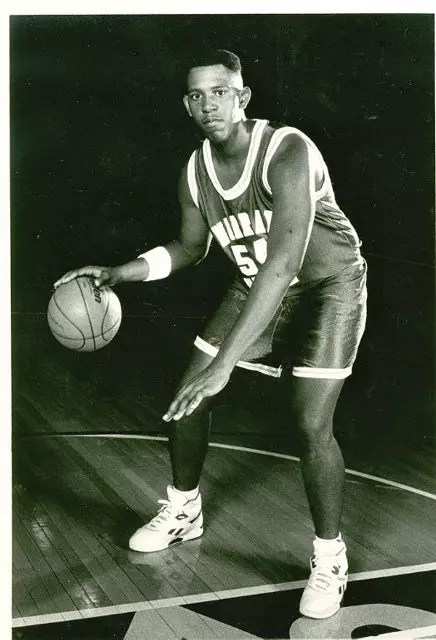
He came out of Murray State, a mid-major program that had produced good players but very few long NBA careers. Decades later, Ja Morant would change the way modern fans hear the school’s name. In the early 1990s, though, Murray State still sat far from the center of the NBA map. Jones had been a dominant college player, averaging almost 21 points and 14 rebounds over his final three seasons, but Houston had taken him near the end of the second round in 1992, and there was no guaranteed NBA contract waiting for him. Rather than fight for a roster spot without security, he chose Italy.
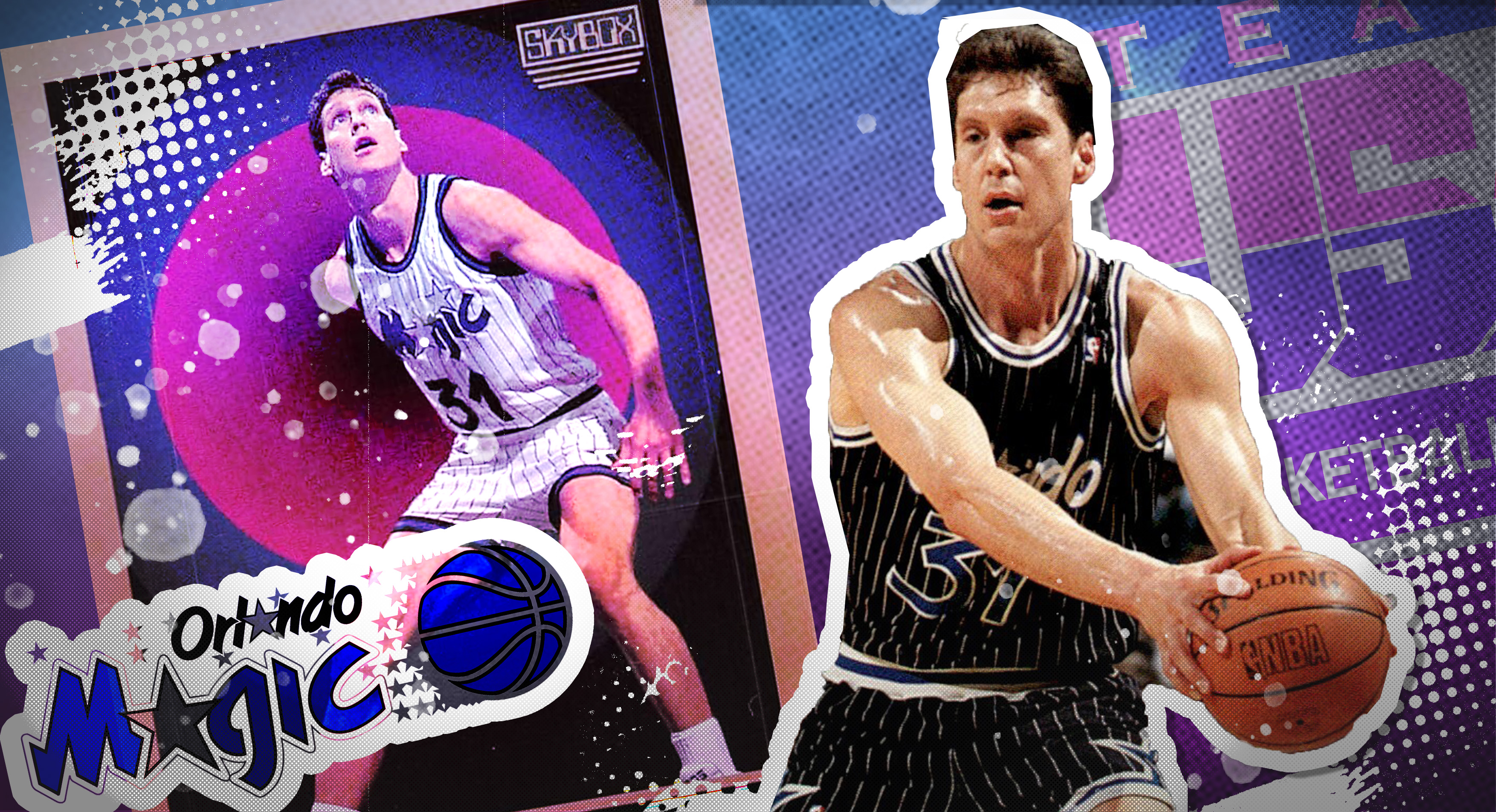
Popeye Jones spent the 1992-93 season with Teorematour Milano in Italy’s Serie A2. This was not the glamorous Milan of European basketball memory, but Aresium/Teorematour, a second-division club fighting through the middle of the Italian table. According to one of his early NBA cards, Jones averaged 21.1 points and 13.3 rebounds there. Wherever he was placed, whether in the Ohio Valley Conference or in an Italian gym far from the NBA’s main stage, Jones could rebound.
By the summer of 1993, Houston had traded his rights to Dallas, and that was where his NBA career finally began.

Dallas was not an easy place to begin. The Mavericks had just gone 11-71 in 1992-93, then entered Jones’s rookie season with Quinn Buckner on the bench and one of the least stable rosters in the league. Jones was not eased into a finished team. He was asked to play immediately because Dallas needed bodies who could rebound, defend their space, and survive losing basketball.
“It was the perfect place for me. I was young, the team was rebuilding, and I was able to play and become one of the better rebounders in the league at that time. Play defense, play hard, do the hustle thing. But we weren’t very good. I was developing, but when you’re developing, that means you’re losing.”
As a rookie, he played 81 games, started 47, and led the Mavericks in rebounding. He finished among the best first-year players on the glass, played in the Rookie Game. Under Dick Motta, he became a full-time starter, averaging double-digit rebounds in both 1994-95 and 1995-96. The scouting-book language around him had changed from prospect to contributor: stronger, more physical, one of the league’s better offensive rebounders, a player who could manufacture possessions through effort, positioning, and leverage rather than polish.
Those were the years of Jason Kidd, Jamal Mashburn, and Jim Jackson, a young core that briefly made Dallas look like it might be climbing out of the basement before the whole thing became unstable again.
By then, Jones had established himself as a legitimate NBA starter, even if Dallas remained one of the league’s worst teams, a hard rebounder who could play real minutes and give structure to lineups that often lacked it.
Teams in Transition
In July 1996, Dallas traded Jones to Toronto in a deal built around Jimmy King and future draft picks. From the Raptors’ side, the logic was clear enough: Isiah Thomas wanted rebounding, and Jones had just averaged double-digit boards in back-to-back seasons. Toronto was only entering its second year of existence, still coached by Darrell Walker, still trying to build an NBA identity from scratch, and Jones gave them a real frontcourt piece right away.
His first season in Canada was one of the last times he looked like the same heavy-minute player he had been in Dallas. Jones played 79 games, started 61, averaged more than 30 minutes a night, and gave the Raptors 8.6 rebounds per game. The team finished 30-52, which was still a losing record, but for an expansion franchise in its second season, it was at least a sign of competence.
The following year was different. Jones played only 14 games for Toronto, the Raptors collapsed to 16-66, Walker was replaced by Butch Carter, and Damon Stoudamire, the first face of the franchise, was traded to Portland. Kenny Anderson came back in that deal, did not want to stay in Toronto, and within days he was sent to Boston. Jones went with him.

Boston did not acquire Jones as the central piece. The Celtics wanted Anderson, a proven point guard, and Jones became part of the larger deadline deal that sent Chauncey Billups, Dee Brown, Roy Rogers, and John Thomas to Toronto. He arrived in Rick Pitino’s Boston, a loud and restless rebuild that was still trying to climb out of the post-Larry Bird years, but because of his knee, Jones did not play for the Celtics in 1997-98. In the lockout season that followed, he appeared in only 18 games.
Toronto had traded for the heavy-minute rebounder from Dallas, but by the time he reached Boston, he was no longer that player. He missed the rest of 1997-98, returned in the lockout season with a much smaller role, and from that point forward his career became more dependent on situation, health, and roster need.
By August 1999, he was moving again, this time to Denver in the Ron Mercer-Danny Fortson trade. Once again, the main story belonged to other players. Mercer was the former lottery pick Boston had decided not to pay, Fortson was the productive young big Denver was willing to move, and Jones was included with Dwayne Schintzius as another veteran body attached to a larger roster decision. The Nuggets, coached by Dan Issel, were stuck between eras, far removed from the Dikembe Mutombo teams and still years away from the Carmelo Anthony reset. Jones played 40 games, but only 8.3 minutes a night.
His next stop gave him one last real role. In September 2000, Denver traded him to Washington with a future second-round pick for Tracy Murray, who wanted out. The first year was rough: Leonard Hamilton’s Wizards went 19-63, and Jones played 45 games. But in 2001-02, with Doug Collins on the bench and Michael Jordan back in uniform, Jones became useful again. He played 79 games, started 40, averaged about 24 minutes, and gave Washington roughly 7 points and 7 rebounds a night.
On a team built around Jordan’s comeback, young frontcourt pieces like Kwame Brown, Brendan Haywood, and Etan Thomas, and the familiar uncertainty of early-2000s Washington, Jones was not a headline, but he was still doing NBA work. He was also no longer the kind of player a franchise was likely to build plans around. Washington did not bring him back, choosing financial flexibility and minutes for younger bigs over another year of a veteran rebounder in his early thirties.

The Playoffs Without Popeye
Dallas finally became the right team after Jones had already passed through it once.
In September 2002, the Mavericks signed him as a free agent, looking for frontcourt help behind a team built around Dirk Nowitzki, Steve Nash, Michael Finley and Don Nelson’s open offensive system. This was no longer the broken Dallas team of the mid-1990s. The Mavericks were a contender, and the regular season confirmed it: 60 wins, the league’s best offense, and a trip to the Western Conference Finals.
For Jones, the return never really developed. He dealt with back and ankle problems early, played only 26 regular-season games. Dallas had signed him for rebounding and veteran frontcourt depth, but the team was already moving at a different speed.
The Mavericks played 20 playoff games in 2003. Jones did not appear in any of them.
He had spent his best years starting and rebounding for teams that had no chance to play deep into spring, and when he finally reached a team built for the playoffs, he was no longer healthy or central enough to be part of the games that mattered.
The next trade was the last sign of how far his career had shifted. In August 2003, Dallas sent Jones to Golden State as part of the large Antawn Jamison deal, along with Nick Van Exel, Avery Johnson, Evan Eschmeyer, and Antoine Rigaudeau. The basketball reasons were elsewhere. Dallas wanted Jamison after reaching the conference finals. Golden State reshaped its roster around Van Exel and the return package. Jones was a veteran contract in a larger transaction. He played five games for the Warriors.
The No-April Club
Basketball-Reference lists him sixth among the players with the most regular-season games and no playoff appearances: 535 games, 11 seasons, 12,579 minutes, 3,981 rebounds, and not a single postseason minute.

The names around him belong to a strange category of NBA history. Tom Van Arsdale played 929 games, made three All-Star teams, and never reached the playoffs. Otto Moore, Nate Williams, Omri Casspi, Sebastian Telfair, and Jones all lasted long enough for their absences to become more than statistical noise. A short career without playoff minutes is common. An 11-year career without them is something else.
Jones fits that group because he was not a marginal player who barely passed through the league. He was a real rotation big, and for a time a real starter. Dallas used him heavily. Toronto traded for him to rebound. Washington gave him one of the steadier late roles of his career. Even when he became a secondary piece in larger trades, teams still saw a use for him.
Jones moved when teams moved him, and the reasons were often larger than him: rebuilding plans, expansion needs, contract decisions, cap space, frontcourt development, salary matching… His career passed through the machinery of the league as much as through the standings.

After his playing days, Jones finally reached the postseason life his NBA career had avoided. He moved into coaching, worked in player development and assistant roles, joined Michael Malone’s staff in Denver, and won an NBA championship with the Nuggets in 2023. Murray State later celebrated him as a former Racer who had become an NBA champion from the bench.
It does not change the oddity of his playing career. Jones lasted 11 NBA seasons and carved out a place as one of the league’s better rebounders before injuries reduced his role. He was traded when teams changed direction, attached to deals built around bigger names, and eventually returned to Dallas just as the franchise he had known at its worst became a contender. By then, his body and his place in the rotation had changed.
Popeye Jones was good enough to stay in the league for more than a decade. He was just never quite in the right place when spring arrived.












Leave a Reply