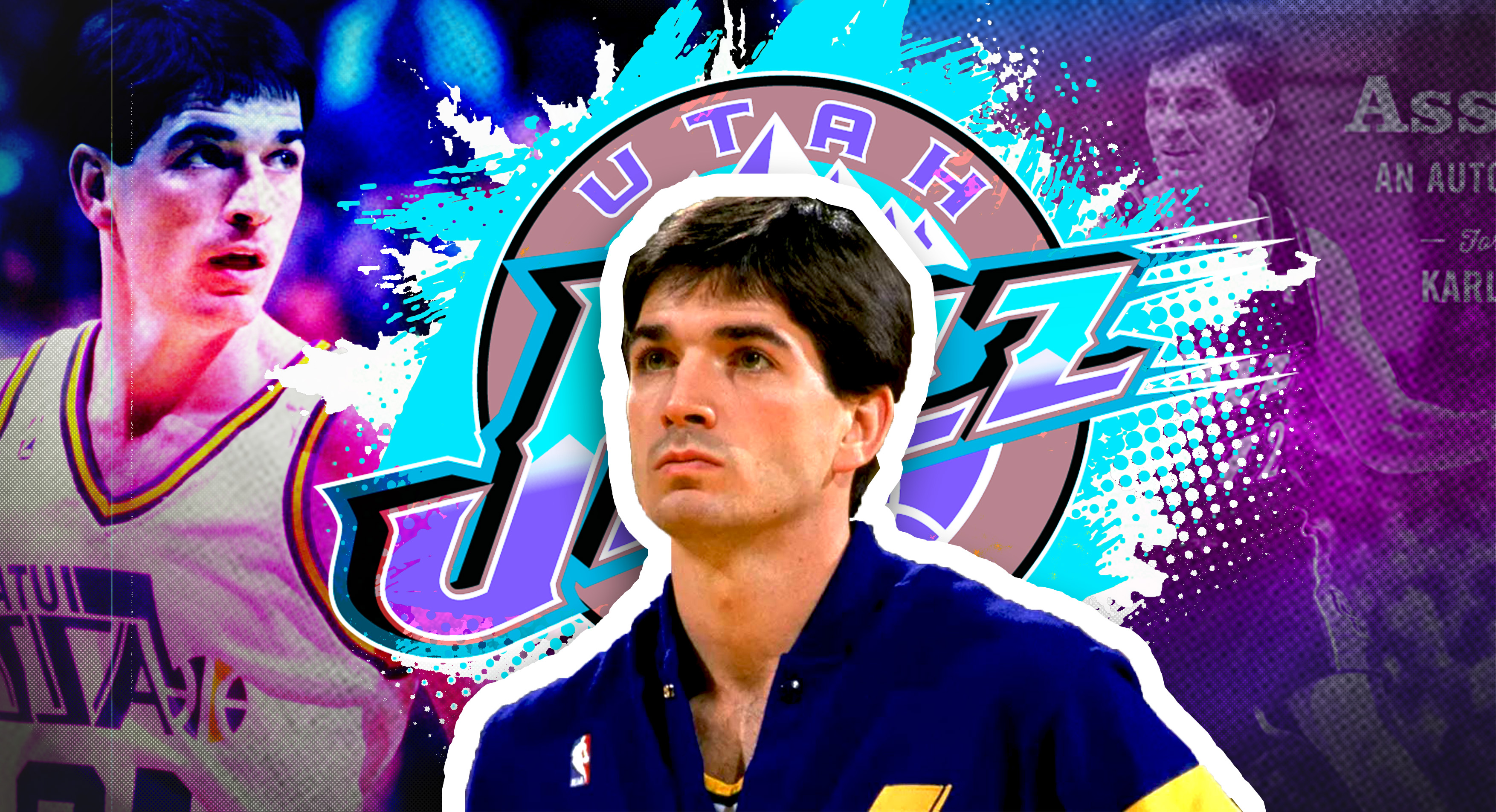
A personal memoir from the quiet floor general of the Utah Jazz
A book prepared over four years, written entirely by John Stockton himself, without a ghostwriter, though supervised by his former high school coach Kerry L. Pickett, a man of letters and amateur poet.
The foreword is written by his longtime teammate Karl Malone. As always, the Mailman’s words toward his loyal point guard are full of warmth and affection.
The biographical aspect, largely centered on family (the first third of the book), may not immediately interest die-hard NBA fans. But having now read quite a few biographies of former players, Stockton’s is among the best written and most compelling. The book reads as much like a personal testament as a straightforward biography, a memoir written with the straightforward honesty that defines Stockton himself.

Minimalist and not materialistic, he chose the most basic hotel room in Salt Lake City during his rookie season, never turned on the heating, prepared huge batches of homemade lasagna to freeze for the entire season, and his only luxury was waiting four months before finally buying a television, solely to watch the Super Bowl. A small nod to his heritage: he is the grandson of Hust Stockton, the 1926 NFL champion with the Frankford Yellow Jackets.
One basketball anecdote that was new to me: Stockton was among the final group of players considered for the 1984 Olympic team, but head coach Bobby Knight chose his own Indiana Hoosiers point guard Steve Alford instead (who had an excellent tournament, though obviously a far less remarkable career than Stockton).

“He’s Irish Catholic, he laughs at my jokes and his dad owns a neighborhood bar“
Frank Layden, always good for a punchline, is portrayed as one of the most good-natured figures in the NBA at the time.
Outside of Layden’s Jazz, George Karl, then coaching the Cavaliers, showed the strongest interest in drafting the Gonzaga point guard, followed by Jack Ramsay for the Trail Blazers.

We also learn that Stockton’s rookie contract negotiations were particularly difficult. He even missed the team’s first training camp and was ready to leave for Europe. And that the Jazz franchise, after relocating from New Orleans to Salt Lake City in 1979, nearly ended up being sold to Saudi billionaire Adnan Khashoggi, who would then have moved the team to Las Vegas. Stockton and his teammates even played several games in Nevada in 1984 to test the facilities. And of course there is much more to discover.
The book is substantial and covers the entire life of the Spokane point guard: his years at Gonzaga, his draft, his literary discussions with assistant coach Phil Johnson, his anxiety during the transition on the Jazz bench from the eccentric and hilarious Frank Layden to the hard line leadership of Jerry Sloan, his two Olympic campaigns (1992 and 1996), or the request from NBA Entertainment to film his stay in Barcelona by giving him a camera, knowing full well that locals would never recognize him.

You also sense his loneliness after Jeff Hornacek retired in 2000. Stockton struggled to connect with this new generation of players who spent their time with headphones on, cutting themselves off from teammates.
His twenty-year career, and just as many trips to the playoffs, are thus revisited across nearly four hundred pages. His four-year college career at Gonzaga. The two NBA Finals against the Bulls. The epic seven-game series against Magic Johnson’s Lakers in 1988. And the way he managed to keep his wife and children closely integrated into the daily life of his career.
The book is richly illustrated, with nearly one hundred photographs, most taken from Stockton’s personal collection.
In the end, the book’s only misstep may be the cover photo choice: that rather unfortunate black Jazz road jersey.
Essential reading for anyone interested in John Stockton.












Leave a Reply