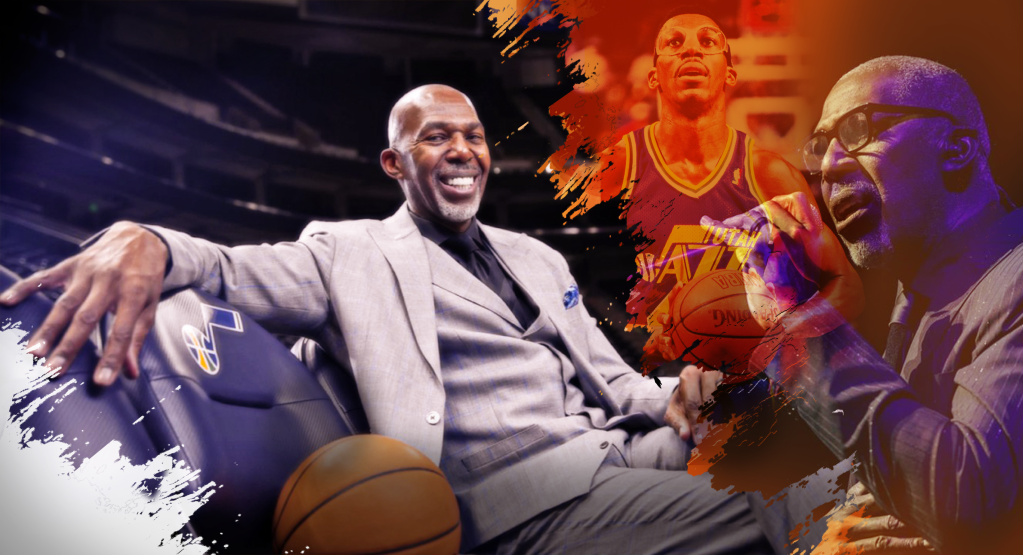
From late bloomer to 1983 NCAA champion and a decade in Utah
Capitol Heights, Maryland, mid-1970s. As was common at the time, it is through a flickering black-and-white television set lighting up the family living room that young Thurl Bailey experiences his first real basketball emotions, mesmerized by the aerial artistry of Julius Erving. Despite already standing well over six feet tall before the age of 15, basketball is far from his main concern. Academic success comes first, under the guidance of parents who see education as the only real path out. As a result, Bailey takes up basketball late, and struggles badly at first:
In middle school, the same coach cut me from the team two years in a row. It was discouraging. The third year, a new coach arrived and took me under his wing. In addition to team practice, he worked with me one-on-one, an hour before and an hour after practice. I had so many weaknesses. The previous coach only played me for one minute per half, just for the opening tip. This one gave me four hours of his time every day, two with the team and two on my own.
That time was not wasted. Bailey shows real potential, develops rapidly, and eventually reaches his full height of 6-foot-11. He earns a college scholarship in North Carolina, where his parents are originally from. A lifeline that allows him to escape his childhood neighborhood and head to NC State, not to be confused with the Tar Heels of UNC. He is coached by the legendary Norm Sloan, in charge since 1966, who had led the Wolfpack to the NCAA title in 1974 behind star forward David Thompson. Their time together lasted only one season. After fifteen years of loyal service, Sloan returns to his first love and takes the head coaching job at Florida.
It is Jim Valvano who takes over in 1980. An unknown 34-year-old, already flamboyant. Looking like a supporting character from Goodfellas, with the confidence of a used-car salesman and the natural timing of a stand-up comic. Traits that would later open doors at ABC, ESPN, the Hall of Fame, and eventually lead later entangled in multiple scandals. Valvano deserves a full article of his own. We will keep it brief.
In his first address to the team, Valvano boldly claims that NC State will soon win the NCAA championship. Thurl Bailey, who seriously considers transferring after the arrival of this eccentric coach (his parents thankfully talk him out of it), is skeptical:
We thought he was crazy. We were not one of the best teams in the country, not even the best in our region. At UNC, they had James Worthy, Brad Daugherty, Michael Jordan, Sam Perkins. We had no individual talent at that level. And yet, two and a half years later, he proved to be right.
Valvano makes Bailey his leader. Over his final three college seasons, Bailey becomes the team’s leading scorer, rebounder, and shot blocker. In their first season together, 1981-82, NC State narrowly misses the NCAA tournament. The following year, they are eliminated in the first round.
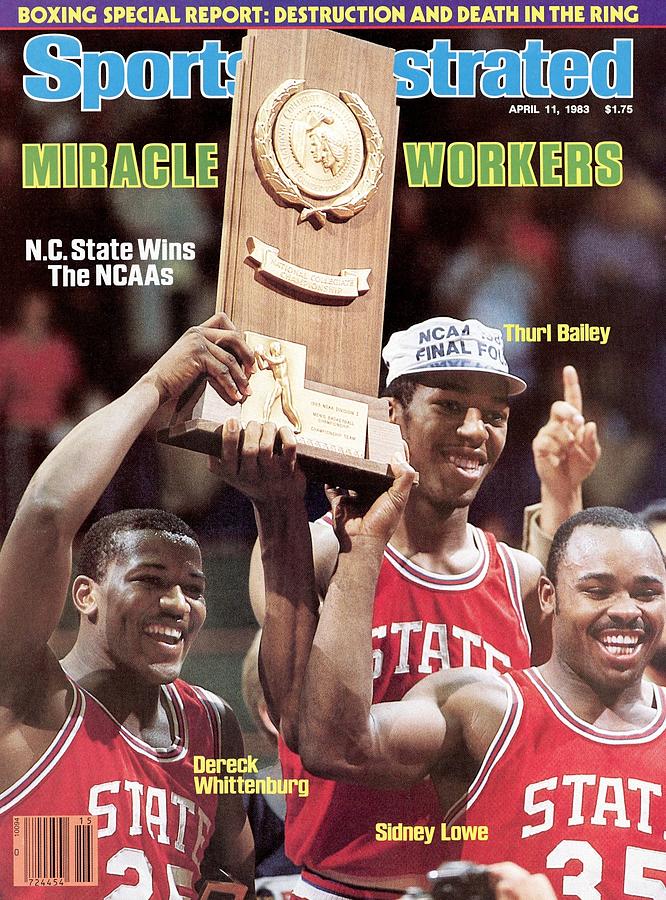
Nothing suggests that the 1982-83 Wolfpack will be a title contender. And yet. After beating rival North Carolina in overtime during the ACC Tournament, NC State reaches the Final Four, notably eliminating Ralph Sampson and Rick Carlisle’s Virginia Cavaliers, heavy favorites. In the championship game, a true powerhouse awaits. The Houston Cougars, led by Akeem Olajuwon, Clyde Drexler, Michael Young, and Larry Micheaux. Houston has won 33 of its 35 games and is considered the clear favorite.
Drexler quickly gets into foul trouble and heads to the bench. Young and Micheaux struggle to score. Only Olajuwon carries Houston, finishing with 20 points, 18 rebounds, and 7 blocks. NC State battles. Bailey delivers a solid performance with 15 points. The score is tied at 52 with one possession left. Houston traps the ball handler in a zone defense. The ball ends up in Dereck Whittenburg’s hands. He launches a desperate shot from the logo. A perfect airball that somehow lands in Lorenzo Charles’ hands for the game-winning dunk.
Final score 54-52. NC State is champion for the second time in its history, nine years after the 1974 title, and will never win another. The Wolfpack would not even return to the Final Four until 2024. The upset is monumental, and the 1983 championship remains widely regarded as the most improbable NCAA title ever, alongside Villanova in 1985.
From that championship team, only Bailey will carve out a true NBA career. Point guard Sidney Lowe, also drafted in 1983, plays a few seasons mostly in Indiana and Minnesota, but never establishes himself. Whittenburg, David Thompson’s cousin, becomes a college assistant coach. Lorenzo Charles briefly plays for Atlanta before bouncing through minor leagues and tragically dying in a bus accident in 2011. Center Cozell McQueen enjoys a long career in Europe.
Drafted in 1983 by the Jazz: The Beginning of a Long Story
Crowned NCAA champion and selected to the All-Tournament Team, Bailey, now nicknamed Big T, is naturally projected as a lottery pick in the 1983 NBA Draft.
A center’s body, a forward’s instincts
Bailey is an atypical player. Center height at 6-foot-11, but long and lean. He weighs just under 200 pounds as a rookie and never tops 220. A solid shot blocker, but less comfortable battling for rebounds. He develops a reliable mid-range jumper, preferring to attack on the move rather than posting up.
Used as a power forward and often a small forward in college, a role he would frequently occupy in the pros. A perimeter-oriented rebounder despite his size, especially by 1980s NBA standards.
His gradual shift to small forward is accelerated two years into his NBA career by the drafting of Karl Malone, the archetypal power forward. Defensively, Bailey is often assigned to Larry Bird, the toughest player I ever had to guard, Julius Erving, or Magic Johnson. Rarely to traditional big men, who usually outweigh him by 30 or 40 pounds.
The 1983 draft is often considered underwhelming. Ralph Sampson, Steve Stipanovich, and Rodney McCray go top three. Drugs, injuries, inconsistency. Take your pick. Still, the class produces Clyde Drexler, Dale Ellis, Derek Harper, Jeff Malone, Byron Scott, and Doc Rivers.
Bailey is selected seventh overall by the Utah Jazz, entering the franchise’s fifth season in Salt Lake City after relocating from New Orleans in 1979. He becomes the second cornerstone of a smart rebuild through the draft. Mark Eaton in 1982, Bailey in 1983, John Stockton in 1984, Karl Malone in 1985.
His arrival coincides with the beginning of an extraordinary playoff streak. From 1984 to 2003, Utah qualifies every single year. In the mid-80s, the franchise is led by Frank Layden, serving as both head coach and general manager, a respected NBA figure.
The goal is simple. Make the playoffs for the first time since the move west. Alongside Adrian Dantley, John Drew, Rickey Green, Darrell Griffith, and sophomore Mark Eaton, Big T quickly finds his place. Alternating between starter and sixth man, he averages 25 minutes per game and earns All-Rookie honors. Utah qualifies comfortably, even upsetting Denver in the first round before falling to Phoenix.
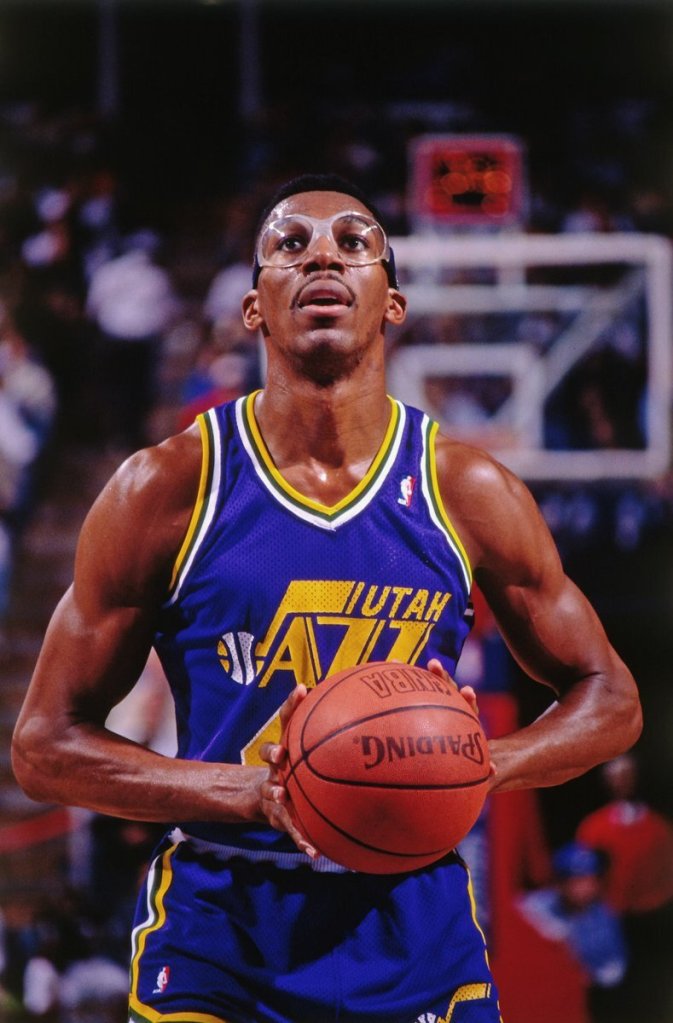
During his sophomore season, Bailey benefits from John Drew’s league suspension and Adrian Dantley’s injury to become a full-time starter. His scoring nearly doubles, from 8 to 15 points per game. He shines in the playoffs as Utah eliminates Houston, led by Ralph Sampson and Olajuwon.
Bailey averages 18 points and 10 rebounds in the series, becoming the team’s second offensive option behind Dantley. In the decisive Game 5, he scores 15 points in the fourth quarter against a frustrated Sampson. Utah is eliminated the next round by a revenge-minded Denver team. Bailey is already considered one of the best shooting big men in the league.
Sixth Man Excellence
The 1985-86 season marks a turning point. With the arrival of Karl Malone, Bailey shifts permanently into a sixth-man role, one he will occupy for most of his NBA career. Despite coming off the bench, he remains fourth in minutes played. With Eaton, Stockton, and Malone, Utah now has its core for the next decade. Bailey receives Sixth Man of the Year votes for the first time. The award goes to Bill Walton.
From 1987 to 1989, Bailey likely plays the best basketball of his career. Nearly 20 points per game off the bench, second scorer behind Malone, now almost exclusively at small forward. His 1988 playoffs are the peak of his Jazz tenure.
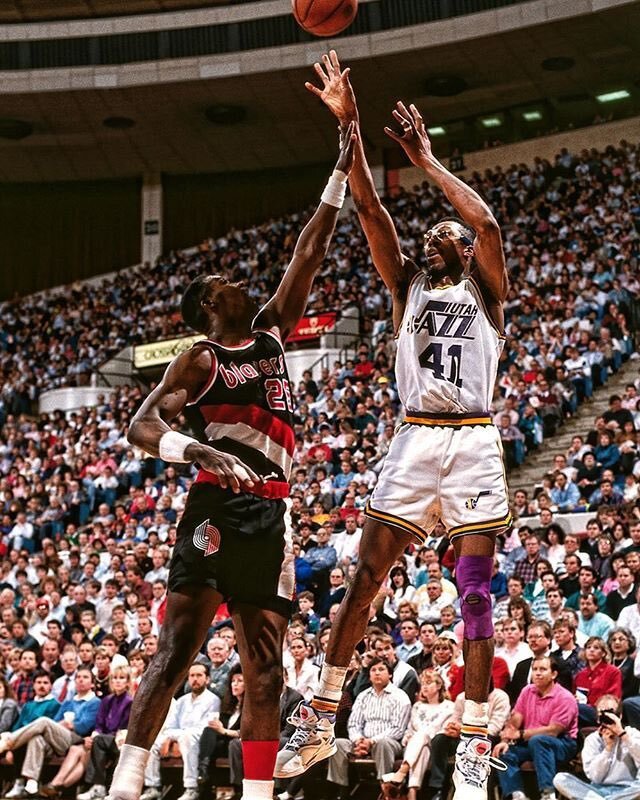
In a first-round win over Clyde Drexler’s Trail Blazers, Bailey averages 28 points per game, including a 39-point, 8-rebound, 4-block performance in Game 3. Utah eventually falls to the Lakers in seven games. Bailey averages 20 points and even delivers a memorable two-handed dunk over Kareem Abdul-Jabbar.
He narrowly misses Sixth Man of the Year in 1988 and 1989, losing to Roy Tarpley and Eddie Johnson by just seven votes. Jerry Sloan replaces Layden late in 1988, who remains general manager.
By 1990, with the arrival of shooting guard Jeff Malone, Bailey’s offensive role diminishes. He averages 12 points in 30 minutes but remains one of the league’s premier sixth men and an exemplary professional. Over his first nine seasons, he plays 734 of 738 possible regular-season games.
1991: The End of the Jazz Years
In November 1991, Utah trades Bailey to Minnesota for Tyrone Corbin. At age 30, Bailey joins the expansion Timberwolves, one of the league’s worst teams:
It was a huge disappointment. It was not Jerry’s decision, but the GM’s, Scott Layden. You do not choose your trade. I found out on the radio driving home from practice. Going from a stable playoff team to a franchise that could not win 20 games was tough. You never get used to losing. But I believe I did my job during those three years.
On a roster led by Scott Brooks, Tony Campbell, and Pooh Richardson, Bailey does what he can. Minnesota tanks hard, winning just 15 games in anticipation of the 1992 draft featuring Christian Laettner, Alonzo Mourning, and Shaquille O’Neal. It’s the first playoff-less season of Bailey’s NBA career.
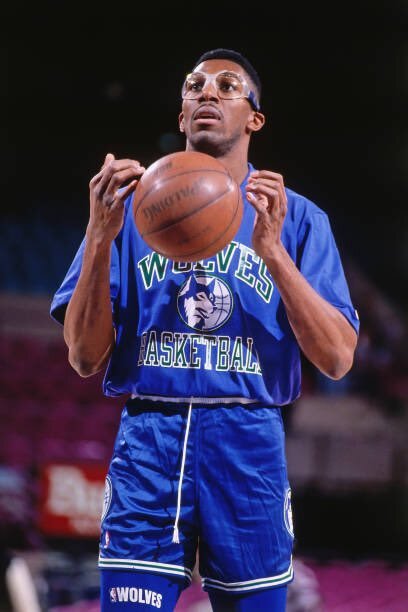
At Minnesota, Bailey returns to power forward and becomes Laettner’s backup in 1992. The Wolves remain near the bottom. Nineteen wins. The 1993 draft nets them Isaiah Rider. Little changes.
At 32, Bailey’s production declines. His modest one-million-dollar salary, eighth-highest on the team despite his veteran status and 69 career playoff games, does not convince him to stay in the Midwest. A curious footnote. He reunites with Sidney Lowe, now Minnesota’s head coach.
1995–1998: Europe and a Second Life
A free agent after the 1993-94 season, Bailey receives lucrative offers from Europe. Leaving the NBA is not easy, but the financial argument proves decisive. In leagues limited to two Americans per team, European clubs offer double or triple his NBA salary. Dominique Wilkins earns seven million dollars over two years with Panathinaikos in 1995.
Bailey signs with Panionios. A disappointing team season, eliminated in the Korac Cup quarterfinals by Milan, but a strong individual year, earning Greek All-Star honors.
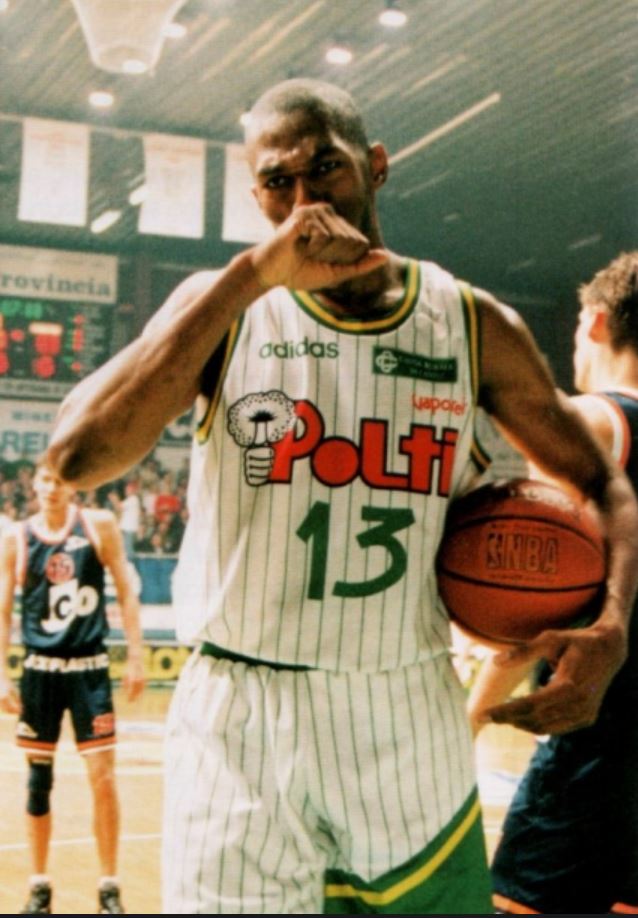
Like Jeff Turner, Darryl Dawkins, or Bill Wennington, he then plays in Italy. Two seasons with Cantù, All-Star Game MVP. Then Milan:
I loved my years in Italy. The lifestyle, the food, the culture. Basketball was a level below the NBA. I went there for financial reasons, but those three years were probably the best of my life in terms of quality of living.
1999: One Last Ride with Utah
At nearly 38, after four years away from the NBA, Bailey returns to Utah for the lockout-shortened 1998-99 season. A six-month contract, well below his European earnings and even below his NBA market value.
Utah has since reached two Finals. Bailey reunites with Jerry Sloan, John Stockton, and Karl Malone, now backing up Malone at power forward. Malone plays 37 minutes a night and never misses a game. There are only scraps left.
Utah finishes with the league’s best record at 37-13, tied with San Antonio. The condensed schedule takes its toll. After a grueling first round against Sacramento, the Jazz fall to Portland. The best player of the series is Isaiah Rider.
Bailey plays his limited role, giving Malone short breathers. Utah offers him another contract for 1999-2000. He declines. Retirement follows. Twelve NBA seasons, four in Europe, 997 games in a Jazz uniform.
Thurl Bailey, the crooner
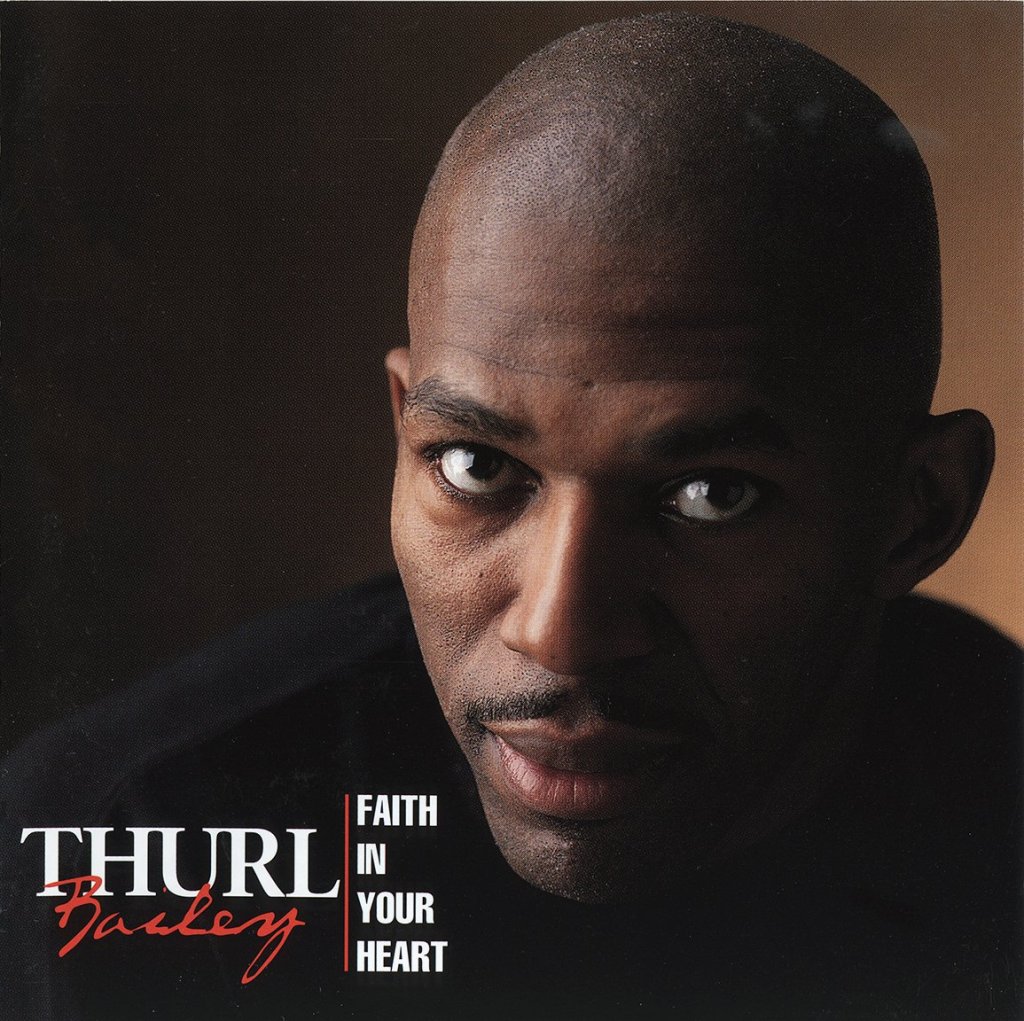
In 1999, Bailey releases his first album, Faith In Your Heart.
I was that weird kid who played basketball with the cool crowd, but also played the tuba with the nerds. On game days, I played the national anthem, then rushed to the locker room to suit up.
A complete musician, Bailey later studies singing. One vocal sample is enough to recognize his deep bass voice. A true crooner. Jazz, soul, even country. Influenced by Earth, Wind & Fire as a teenager. Multiple albums, concerts, and musical theater performances follow.
For years, he forms the Jazz broadcast duo with Craig Bolerjack, becoming one of the most appreciated voices on NBA League Pass.
I understood early that my playing career would last maybe fifteen years. I needed to prepare for life after basketball. By the mid-80s, I knew I wanted to be an NBA analyst. That is what I studied in college.
A respected professional, multiple-time Sixth Man of the Year finalist, recipient of the 1989 J. Walter Kennedy Citizen Award. A durable soldier who missed just 15 games in 16 professional seasons. And above all, a man who would never trade his improbable 1983 NCAA title for an NBA championship ring.
 Deep Bench Chronicles
Leave a comment