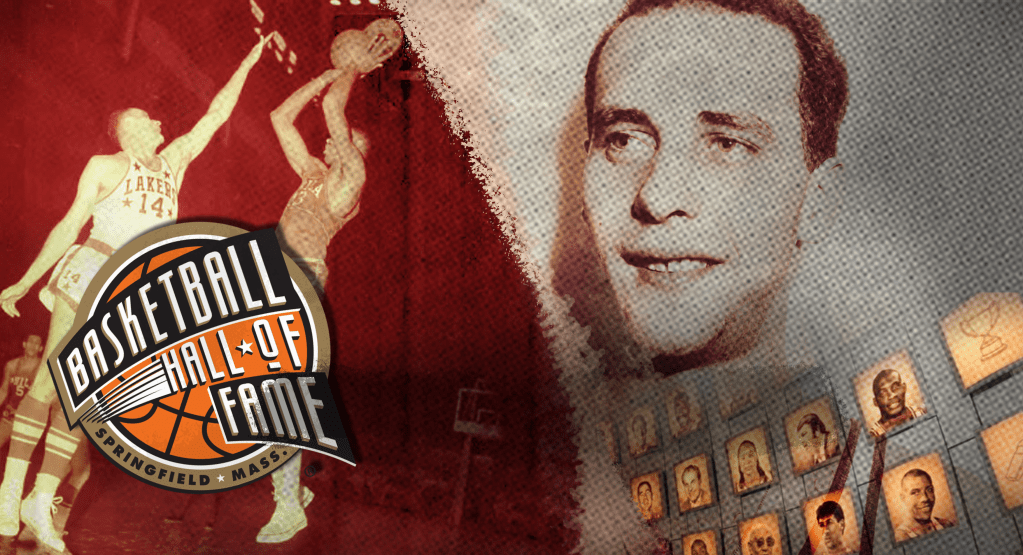
Eight-time All-Star. Five trips to the NBA Finals. Still outside Springfield. The statistical case for one of the greatest centers of the 1950s
If Satch Sanders, Guy Rodgers, Frank Ramsey, Chris Webber, Bob Houbregs, Wayne Embry, and Bill Bradley are in the Hall of Fame, then Larry Foust’s absence is hard to explain.
His résumé is clearly stronger than any of the names listed above. According to Basketball Reference’s Hall of Fame probability model, he ranks 78th at 94.2 percent, the highest mark among eligible players who have yet to be inducted into the mythical pantheon.
Eight All-Star selections. Two All-NBA teams. Five trips to the NBA Finals. The gap is obvious.
If Larry Foust is a name you’re not familiar with, this article aims to bring him back into focus, not through a full biography, but by shedding light on his baffling absence from basketball’s highest honor.
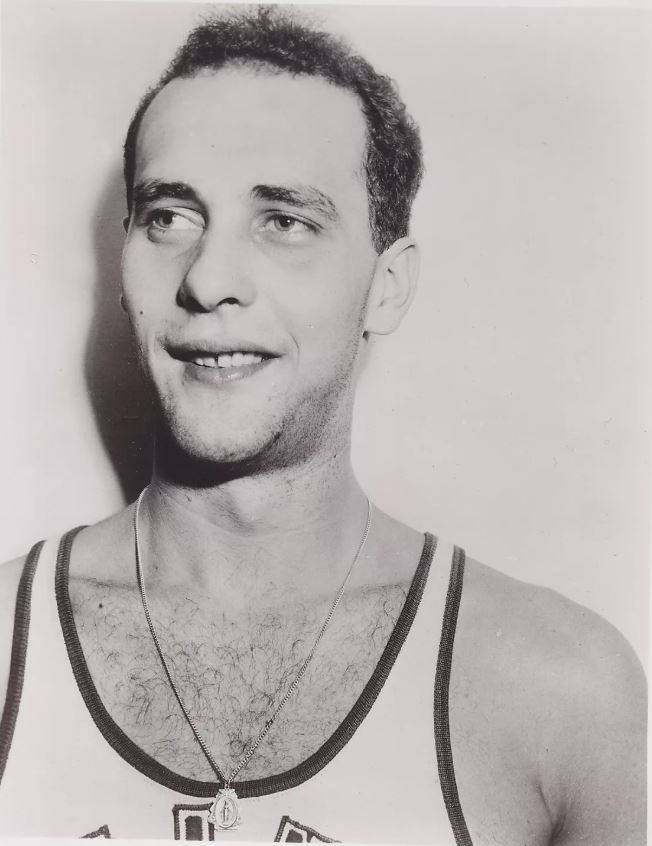
A brief introduction to Larry Foust
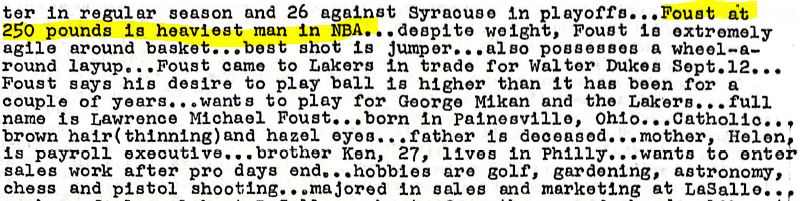
Born in Ohio in 1928, one year before the devastating stock market crash, Larry Foust became the first true star in La Salle history. A center with an imposing build for his era (6-foot-9 and 220 pounds at the start of his professional career, which earned him the nickname The Big One), he was selected sixth overall in the 1950 draft, the first draft officially held under the NBA banner after three seasons of the BAA.
It was a historic class, one of the greatest ever: Bob Cousy, Paul Arizin, George Yardley, and Bill Sharman. In an ironic twist, Foust was drafted by the Chicago Stags, a franchise that went bankrupt and disappeared before the regular season even began.
The Fort Wayne Pistons eventually welcomed the center left orphaned by his defunct franchise. It was there that he played the best basketball of his career, and 68 years after leaving the club in 1957, the year the franchise moved to Detroit, he still ranks tenth in Pistons history in win shares. If his No. 16 has never been retired by the organization, it is likely because he never had the opportunity to wear it under the Detroit banner, unlike Dave Bing, whose No. 21 now hangs in the rafters of the new Little Caesars Arena.
A major figure in 1950s NBA basketball, Larry Foust played from 1950 to 1962. He spent seven seasons with the Pistons, earning six All-Star selections and two All-NBA honors, while narrowly missing Rookie of the Year to Paul Arizin. He then spent two and a half seasons with the Minneapolis Lakers, again making two All-Star teams and being present during the incredible 1960 team plane crash, later recounted by Peter Vecsey in the New York Post.
Foust finished his career more quietly as Clyde Lovellette’s backup with the St. Louis Hawks. Twelve full seasons, five trips to the NBA Finals, all losses, placing him fourth among players with the most Finals defeats, behind Jerry West, Elgin Baylor, and LeBron James.
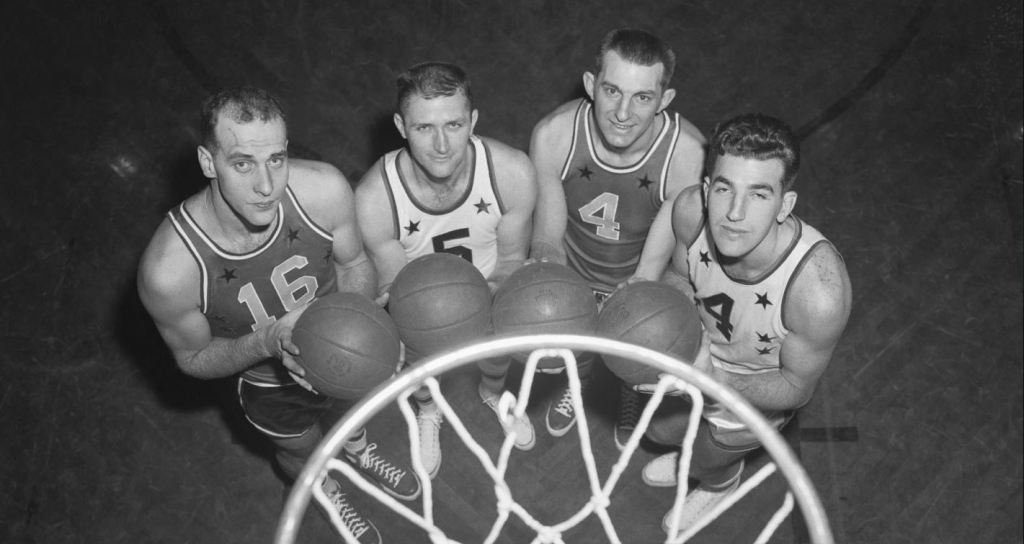
As for his playing style, even by the standards of his era, Larry Foust was not a “sexy” player. With Foust, you were closer to the look of a middle-aged accountant on testosterone therapy than to a Dolph Schayes with his Dean Martin-style charm.
It was an era when players wore their baldness openly and without apology. His Lakers teammate Hot Rod Hundley nicknamed him “Desert Head” because of his receding hairline. Given his position and size, there were no flashy Bob Cousy-style passes, and while his presence in the paint was significant, he was no Manhattan Project like George Mikan.
Still, Foust was a double-double machine, remarkably efficient for his time. He finished four seasons among the league’s top ten in field goal percentage and remained reliable at the free throw line, shooting 74 percent for his career. All of it made him one of the most difficult interior players to face. By Mikan’s own admission, he was his toughest matchup.
Among specialists of early professional American basketball, Foust is widely regarded as one of the very best centers of the league’s first fifteen years, something we will support with clear statistical evidence in the following section.
A Résumé That Speaks for Itself
Basketball fans can have their own opinions about which players deserve a seat at the game’s highest table. Larry Foust, however, stands well beyond that kind of debate.
Being selected to the All-Star Game is an honor, but it does not automatically signal elite status. Jamaal Magloire, Chris Kaman, Steve Johnson, and Dana Barros were All-Stars, yet their induction into the Hall of Fame has never been seriously considered.
The All-Star Game remains an honorary and highly subjective distinction. Its criteria have shifted over the years, assuming they ever truly existed in the first place, and its meaning has evolved considerably over the past thirty years.
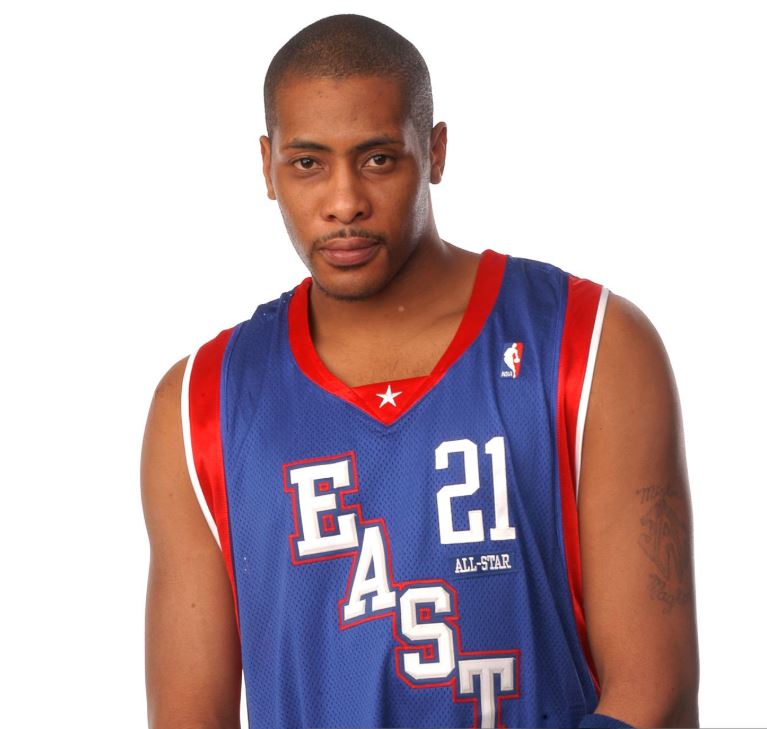
Larry Foust was not selected once, but eight times. That puts him alongside names like Rick Barry, Bob Lanier, and Steve Nash, and even ahead of players such as Scottie Pippen, Walt Frazier, and Kevin McHale.
Foust is the only eligible player with that level of All-Star recognition who is not in the Hall of Fame.
And this is no small sample. Fifty-three players in NBA history have been selected to eight or more All-Star Games. Fifty-two of them are in Springfield.
Many of them were stars of the 1950s and early 1960s: Jerry West, Wilt Chamberlain, Bob Cousy, Oscar Robertson, Dolph Schayes, Elgin Baylor, Bob Pettit, Paul Arizin, Hal Greer, Bill Sharman. Every one of them crossed paths with Foust at some point in his career, whether 101 times in Schayes’ case, his contemporary, or 21 times for Robertson, who entered the league just as Foust was nearing retirement.
Yes, this is a bit of deliberate name-dropping, a common and often weak rhetorical device. But here it serves a purpose: to highlight the company Larry Foust kept.
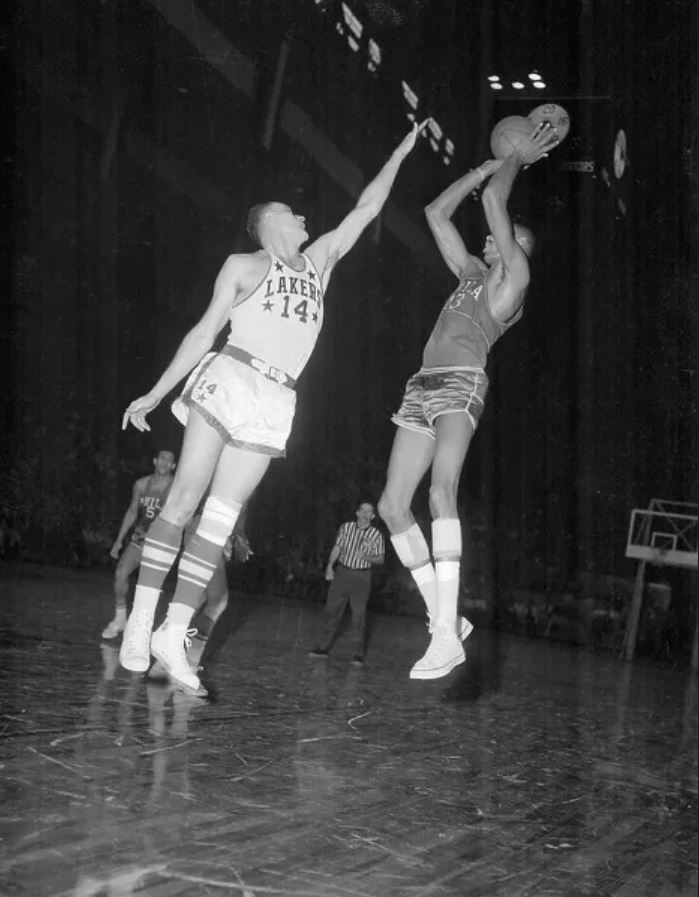
Beyond the All-Star selections, the numbers themselves tell the story. The advanced statistic PER, Player Efficiency Rating, offers a useful window into an era where game footage is scarce.
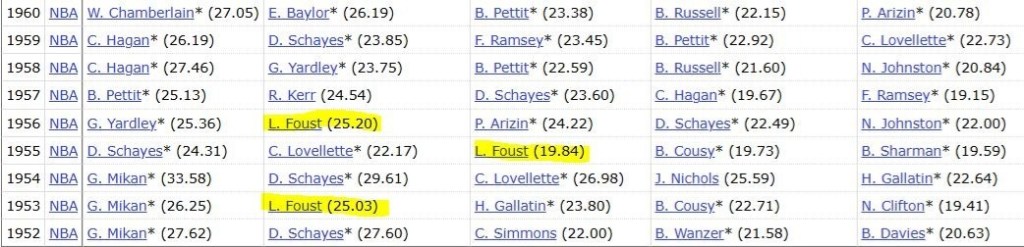
Looking at the table below from Basketball Reference, focusing on the 1952–1960 period and the top five players each season, Foust appears three times: twice as the runner-up, behind Mikan and Yardley in 1953 and 1956, and once in third place behind Schayes and Lovellette in 1955.
Among the roughly twenty players who appear in that chart, Foust is the only one to show up multiple times without being in the Hall of Fame.
If we widen the lens and average PER across the entire 1950s decade, regardless of position, Foust ranks eleventh overall and fifth among centers.
Still not enough for the Hall of Fame?
Harry Gallatin is in. His efficiency rating is only slightly higher, and his résumé is broadly similar, arguably even weaker than Foust’s: one fewer All-Star selection, the same two All-NBA appearances, one rebounding title, and no championship.
Urban legend has it that Gallatin made the Hall because he was David Stern’s favorite player growing up.
Which raises a larger question: how does the Hall of Fame actually work, if it works according to any clear logic at all?
The Hall of Fame, a kingdom of opacity
This may be the main reason for Larry Foust’s absence from the Hall of Fame, along with that of several other deserving figures such as Tom Chambers, Shawn Kemp, Mark Price, Bill Laimbeer, and Kevin Johnson. The Hall of Fame operates without a clear rulebook.
When it comes to induction, the only firm guideline is time: a player must be retired for four years. Beyond that, the process seems to follow the shifting winds of opinion. On the official website, under the section titled Election Process, no clear criteria are outlined.
Lobbying and modern influence are deeply woven into the institution. One should not forget the word Fame in Hall of Fame. In Foust’s case, generational and media bias likely played a major role. He may well be the best player you have never heard of. But he was never considered flashy or marketable, and after his career ended he maintained almost no meaningful network within the basketball world.
What factors might have worked against Larry Foust?
In truth, not much. At least nothing particularly rational or well documented. One theory put forward by Foust’s family is that he may have angered the wrong people within the league. He was known for speaking his mind, and he also had a fondness for alcohol that sometimes loosened his tongue. Whether metaphorical or literal, his Fort Wayne teammate George Yardley once said of him:
“I never saw him sober, and neither did his wife.”
A championship ring would probably have changed the story. Arnie Risen, a contemporary center widely considered inferior to Foust, won two titles, one as a starter with the Rochester Royals in 1951 and another as a reserve behind Bill Russell in Boston. Those rings likely strengthened his Hall of Fame case.
For Foust, the train has probably already left the station. He died of a heart attack in 1984 at just 56 years old. None of his contemporaries remain alive today, former teammates or coaches, with the exception of the ever resilient Cousy. His candidacy was reportedly discussed several times but never gained traction, and no trace of it appears after 1989. There was no sustained lobbying effort for a player who was never especially media friendly during his career, described by teammates as quiet despite his excesses with alcohol.
After retiring in 1962, Foust cut ties with basketball entirely and became a salesman. A common path in an era when an NBA salary resembled that of a modest corporate executive. Unlike many others, however, Foust never returned to the sport in any capacity: no front office role, no summer camps like Cousy or Schayes, no coaching.
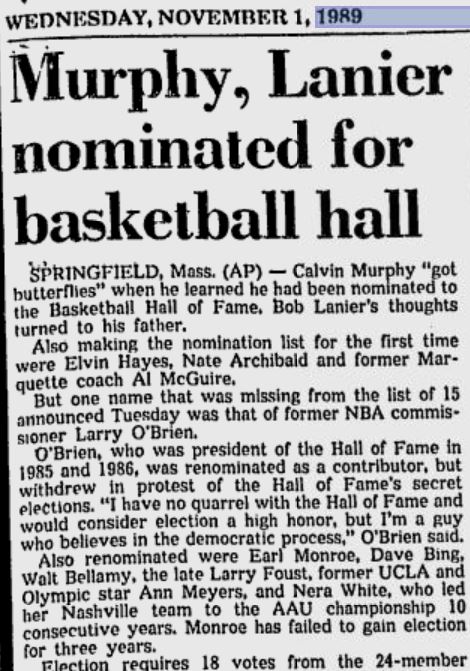
Larry Foust never received the kind of late recognition that eventually carried Zelmo Beaty, Spencer Haywood, or Artis Gilmore into the Hall of Fame. As the decades passed, his case quietly faded into the background. The NBA of the 1950s, the least documented era in the league’s history, does not always rescue all of its forgotten stars.
Yet Foust’s résumé still stands.
Eight All-Star selections. Two All-NBA teams. Five trips to the NBA Finals.
One of the dominant interior players of his decade, respected by his peers and feared by opponents, and still absent from Springfield.
History, at times, has a long memory. In Larry Foust’s case, the Hall of Fame seems to have forgotten.
 Deep Bench Chronicles
Leave a comment