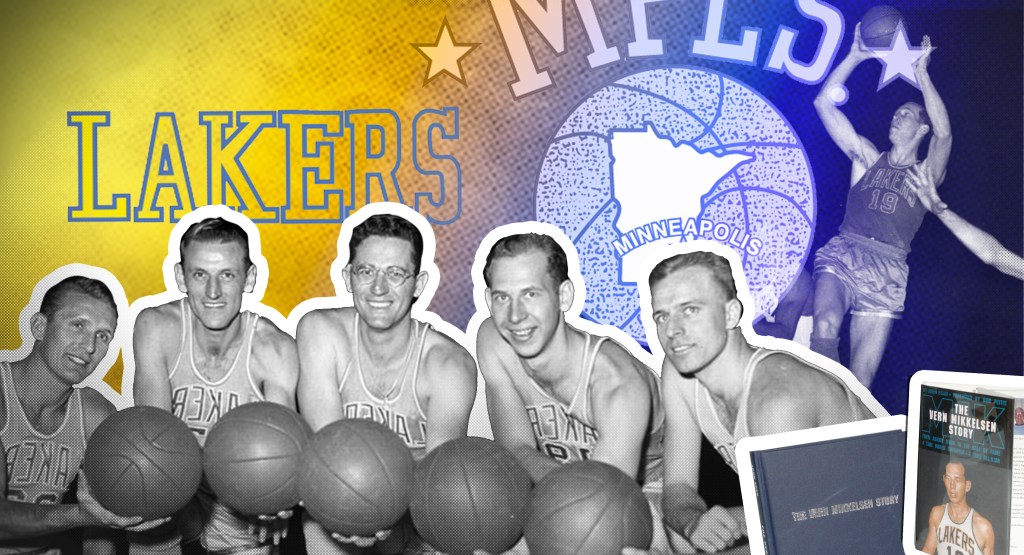
The Quiet Architect of the First Lakers Dynasty, Before “Power Forward” Even Existed
Passed away in 2013 at the age of 85, Vern Mikkelsen is not the most famous Hall of Famer from the NBA’s pioneering fifties. Film lovers might notice that in some photos he bears a slight resemblance to Pete Postlethwaite, best known as Kobayashi in The Usual Suspects. Others may simply move on, wondering why they should spend time on a player who never made a single three pointer.
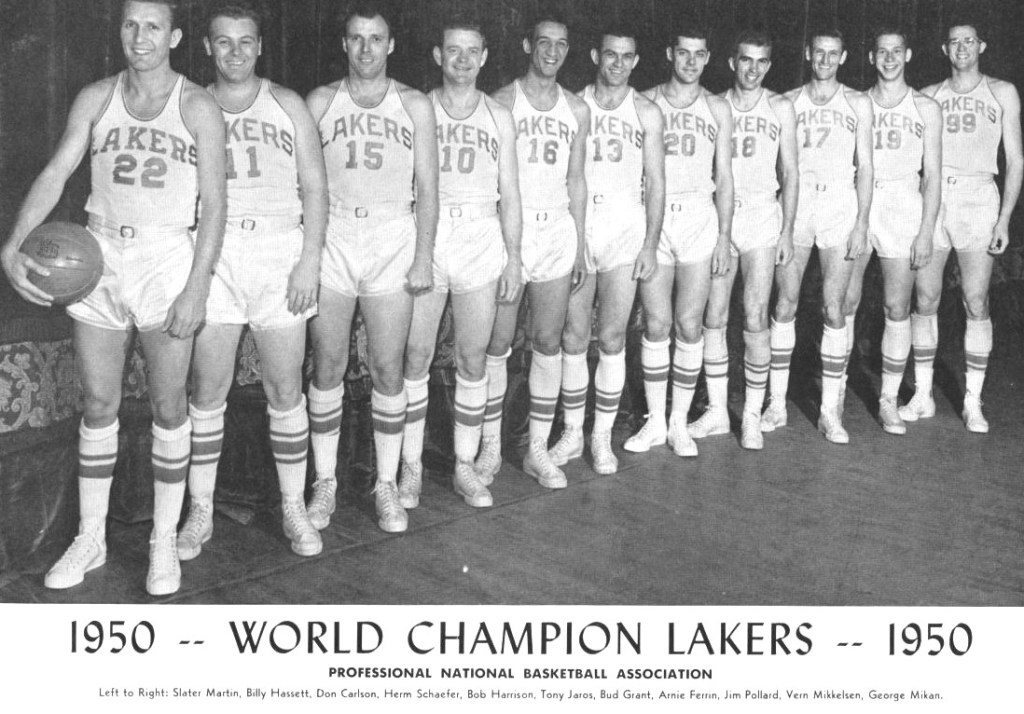
But NBA history enthusiasts will stop here, because Mikkelsen was one of the league’s first true strongmen. The perfect lieutenant to George Mikan with the Minneapolis Lakers, a four time NBA champion, six time All Star, and widely considered the very first power forward in league history, long before the term itself existed.
Published in 2006, this book, written by Vern Mikkelsen with the help of journalist and close friend John Egan and prefaced by Bob Pettit, taught me a great deal about the life of this American Danish big man. Basketball is central to the story, but his life away from the court is just as compelling.
Mikkelsen was a true local product, an authentic Laker. Born in California in 1928, he grew up in Askov, a small town in Minnesota within a Danish immigrant community where his father served as a Lutheran pastor. The town had just 350 residents, 99 percent Danish, and offered few distractions beyond the annual Rutabaga Festival. Around the age of 12 or 13, he discovered basketball at school thanks to Otto Hoiberg, the custodian of his college and the grandfather of Fred Hoiberg.
His basketball journey nearly ended before it truly began. First for financial reasons: his family was poor and could not afford to send him to college. Thanks to his talent, Hamline University, the local school, offered him a full four year scholarship. Then for religious reasons: a strict Lutheran household viewed a stay among Methodist “do gooders” with suspicion. But his natural gift eventually settled the matter. Hamline was no insignificant institution. In 1895, it hosted the very first intercollegiate basketball game played under Dr. Naismith’s original 13 rules.
At the end of his studies, Vern faced three options: turn professional in the NBA, join a traveling singing troupe where a position awaited him, or sign with the Phillips 66ers, an AAU company team backed by the Phillips Petroleum Company and widely regarded as the strongest team in the country, with 1,543 wins and 271 losses between 1919 and 1968.
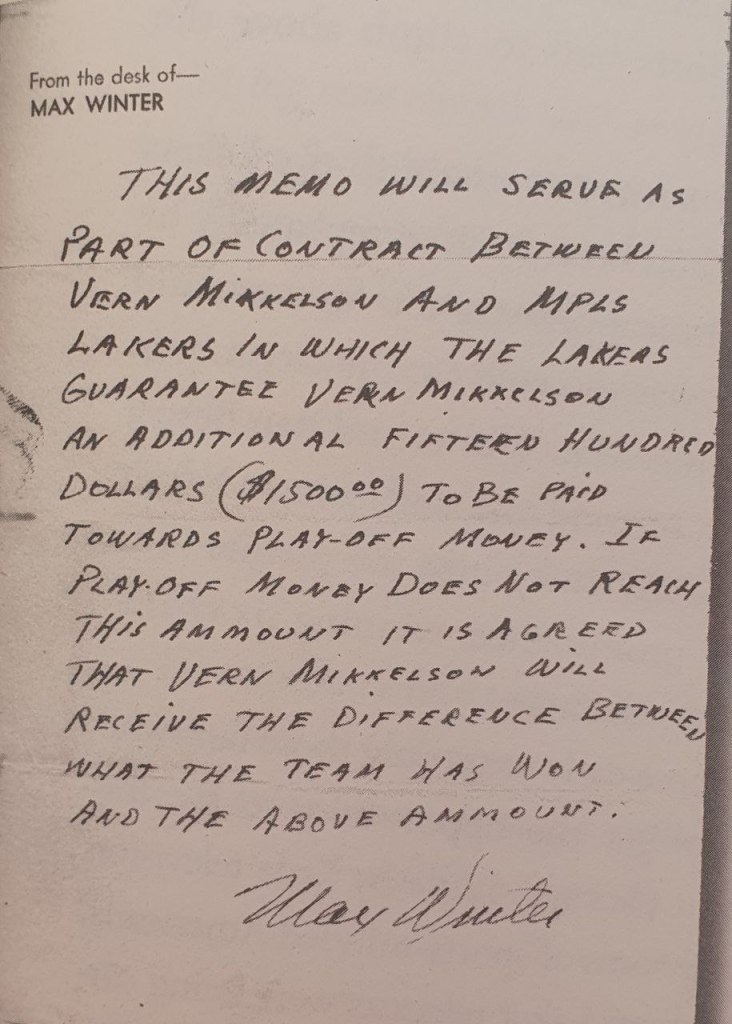
Under the territorial draft system, Mikkelsen was selected in 1949 by the Minneapolis Lakers after dominating his college years as a center, the natural position at the time for a seven footer. Mikan was coming off a grueling 1948–49 season in which he played every minute of every game, and the franchise wanted a second dominant big man to give him relief.
Head coach John Kundla initially stationed Mikkelsen in the paint but slightly farther from the rim to free space for Mr. Basketball. Vern, who had never worked seriously on his midrange shot, developed it and became one of the most accurate shooters of his generation, finishing in the top ten in field goal percentage five times over a ten year career. The goal was simple: build an unbreakable defense.
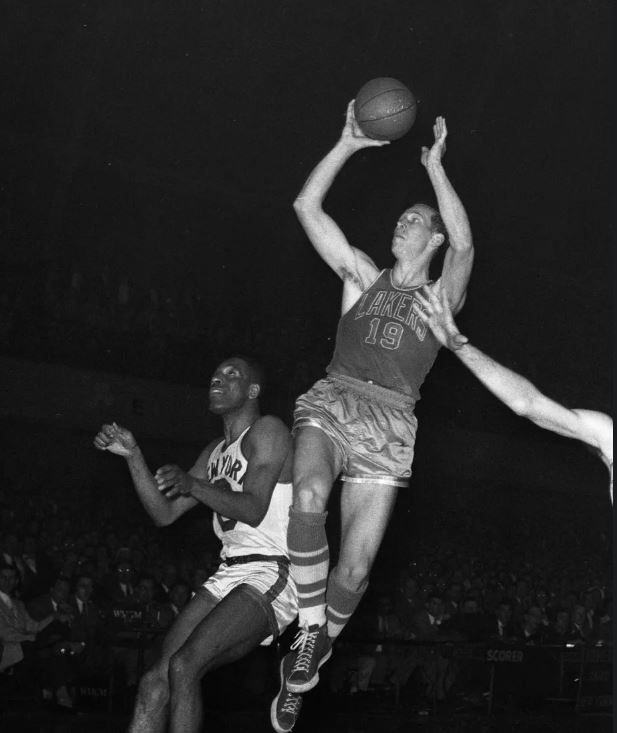
Kundla innovated by pairing two dominant big men in what became his double post offense. Quickly realizing that the lane was too narrow, he shifted Mikkelsen from center into a hybrid role, leaving Mikan close to the basket. An elite rebounder, rugged defender and ideal complement to the star center, the Dane became the prototype of the power forward well before the label existed. On a team already winning championships, Vern proved to be the final piece that allowed the Lakers to dominate the 1950s. In his final season, he passed the torch to rookie Elgin Baylor, the penultimate year of the Lakers’ time in Minnesota before the move to Los Angeles.
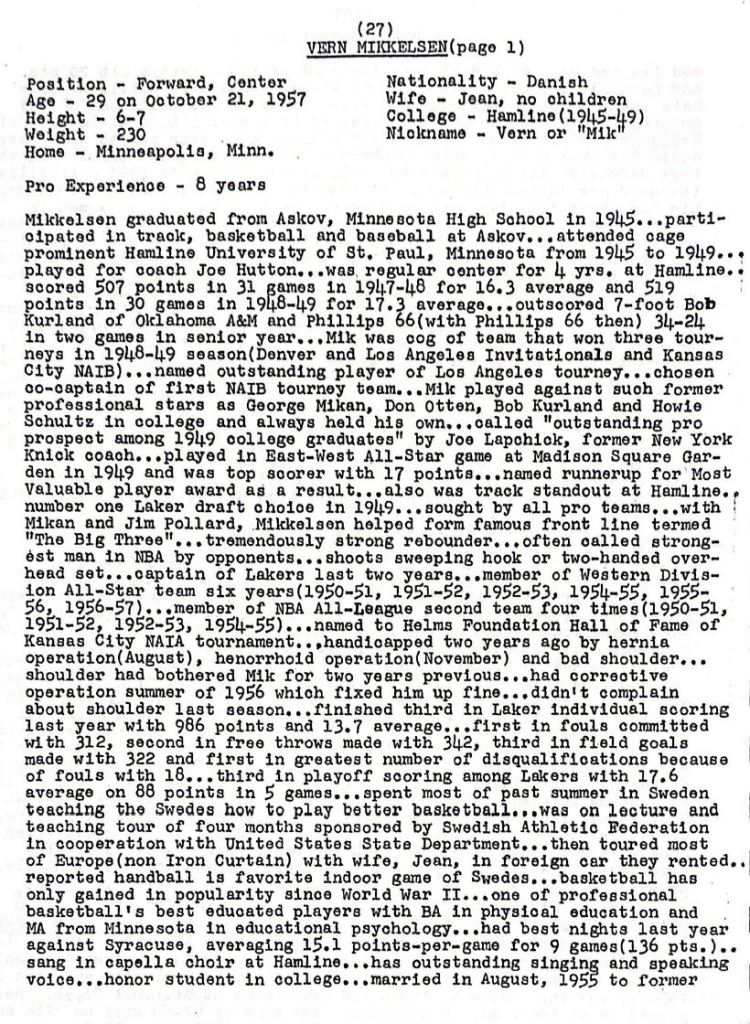
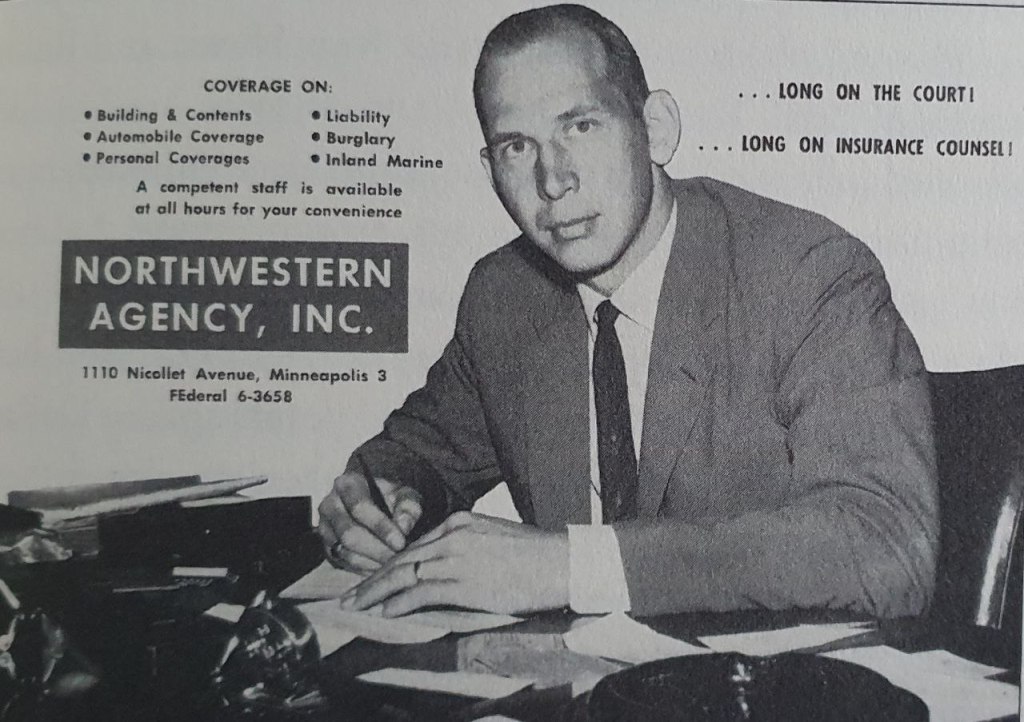
Tired of constant travel and already established in an insurance career, Mikkelsen retired in 1959, even turning down an offer of part ownership in the franchise. He had no desire to leave Minnesota, despite the financial incentives. At his NBA peak, Vern earned $35,000 per year, roughly the salary of a well paid engineer, six to seven times that of the average American at the time. Adjusted for inflation, a modern All Star level player now earns roughly 150 times the average American salary. Succeeding after basketball was not optional.
He briefly served as coach and general manager of the Minnesota Pipers during the 1968–69 season, formerly an ABA franchise from Pittsburgh in the league led by his friend Mikan. The team’s star was Connie Hawkins, future Suns standout. After one season, however, the stability of his insurance business became his primary focus for the rest of his working life.
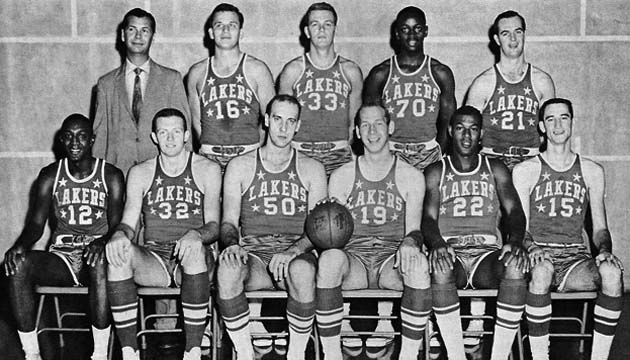
A true thorn on the court, with 127 career ejections, an all time record, Vern played 699 of a possible 704 games in an NBA that resembled trench warfare. Never seriously injured, he battled the dominant big men of the era: Jack Coleman, Dolph Schayes, Bob Pettit, Harry Gallatin, Joe Graboski and Mel Hutchins. Off the court, he survived prostate cancer, two hip replacements, diabetes, hearing loss, two strokes, blindness in one eye, and the death of his wife in 2002 after 47 years of marriage. A recurrence of his cancer ultimately took his life in late 2013.
The book explores many other themes: his deep friendship with Mikan and Jim Pollard, the pioneer of the dunk; the infamous 1950 Lakers–Pistons game, the lowest scoring contest in league history, which led to major reforms such as the 24 second clock, the six foul disqualification rule to keep stars on the floor, and the ban on zone defense; and the brutal travel conditions of the 1950s. An entire chapter is devoted to Elgin Baylor, with whom Vern played only one season but remained close until his death. It is also worth noting that Mikkelsen played two seasons alongside Larry Foust, whom I previously profiled here.
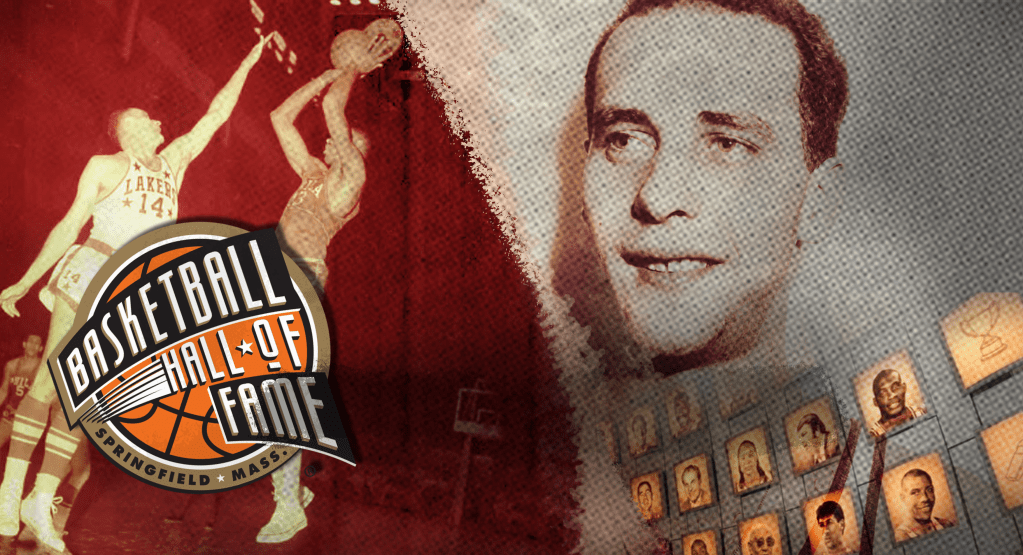
In 1995, he was inducted into the Hall of Fame alongside his coach John Kundla. Vern Mikkelsen, tireless blue collar worker, stands as the first truly modern power forward and the industrial hinge of the NBA’s first great dynasty.
 Deep Bench Chronicles
Leave a comment