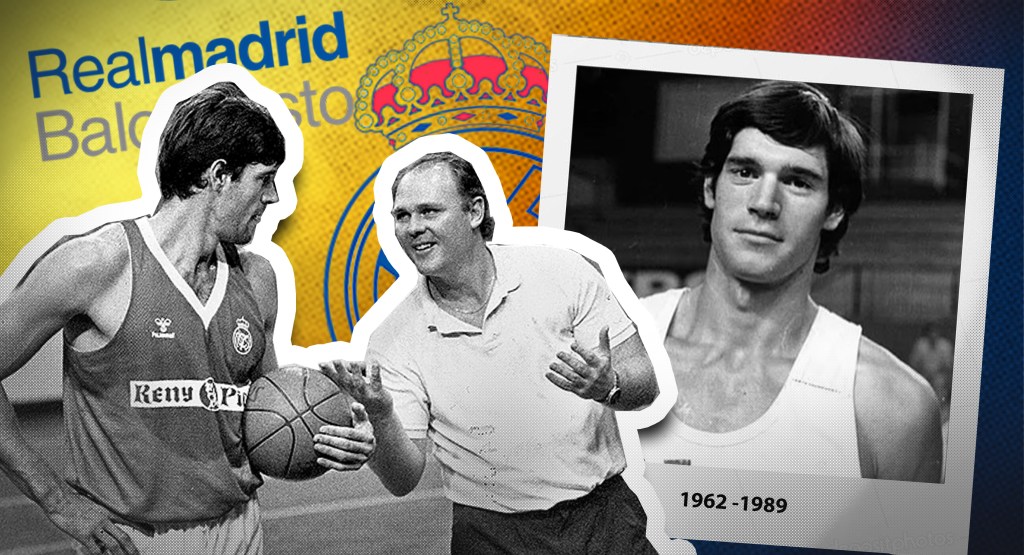
A little-known European chapter marked by tragedy, cultural distance, and the turning point that led him back to the NBA.
“My time at Real Madrid was one of the most important of my life. I grew in many ways at Real Madrid. We went through the tragedy of losing a very special player, Fernando Martín, in a car accident. Those three days were the most emotional of my life.”
Powerful words from George Karl during his 2022 Hall of Fame induction speech. A former Spurs point guard who later coached Cleveland, Golden State, Seattle, Milwaukee, Denver, and Sacramento, he also had a largely forgotten European chapter, on the bench of Real Madrid.
George Karl had very little knowledge of European basketball. Back in 1971, as a North Carolina player, he had set foot in Europe for the first time, in Madrid, for the Christmas Tournament, a friendly mini-tournament organized by FIBA from 1966 to 2006.
Dean Smith’s men narrowly defeated Madrid 83–77, with three future Hall of Famers on the U.N.C. side: Bobby Jones, Bob McAdoo, and George Karl. Two teammates he held in very high regard, since they were part of his Tar Heels college Dream Team, alongside Brad Daugherty, Sam Perkins, and Michael Jordan.
A Yankee at the White House
After two mixed but encouraging stints as an NBA head coach, first in Cleveland from 1984 to 1986, at just 33 years old, with what was then described as “the worst team and the most poorly run franchise in professional basketball” (New York Times), and then in Golden State from 1986 to 1988 under his friend and mentor Don Nelson, George Karl hit a lull. Despite strong connections in the league, the phone stopped ringing. At least for NBA head coaching jobs.
In the meantime, he successfully coached the Albany Patroons in the CBA, the minor league of the time. The Patroons had previously been coached by Karl’s great rival Phil Jackson from 1982 to 1987, and the future Zen Master had won a title there in 1984. Financially, the job paid four times less than the NBA. So when Real Madrid decided to try hiring a foreign coach, Karl stepped forward. Salaries at Europe’s top clubs, for star players and coaches, were very attractive: $200,000 a season, with housing, car, and taxes covered by the club. Better than in the United States.
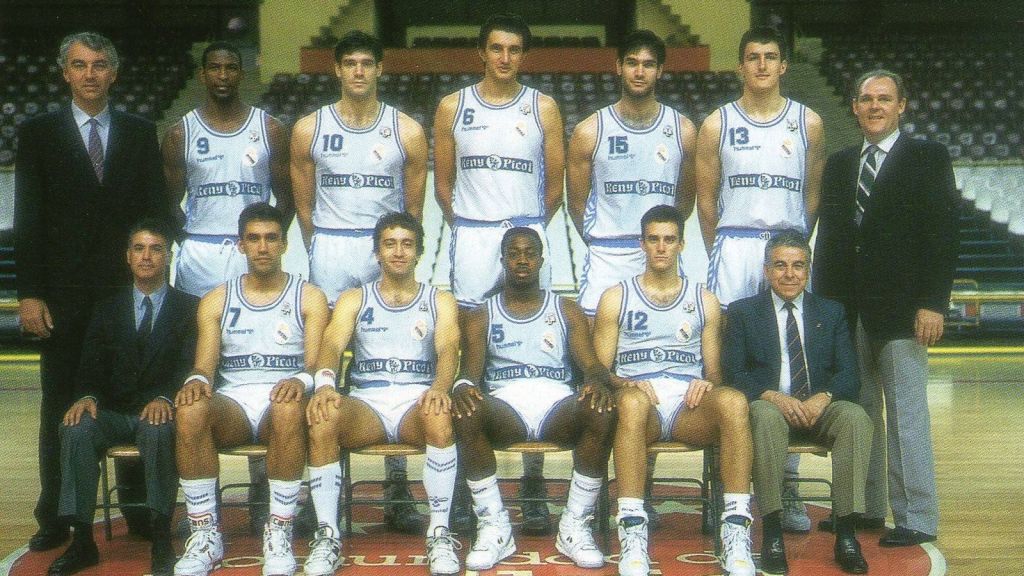
His first stint would be anecdotal from a sporting standpoint. In that first 1989–90 season, Real would not win the league. The team had a strong regular season but fell short in the playoffs: third in Liga ACB, Spanish Cup semifinalist, and defeated in the Cup Winners’ Cup final by Ettore Messina’s Virtus Bologna. Result: ¡Está despedido, señor Karl!
The Death of Fernando Martín
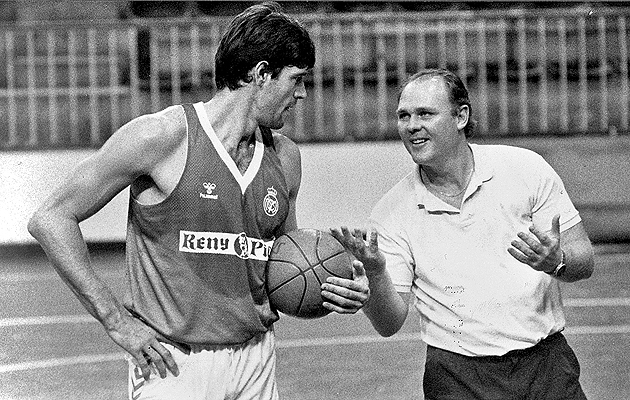
But the sporting side of that first year in Madrid faded into the background, as a tragic event permanently marked the American coach. It concerned Fernando Martín Espina, Real’s star, whom Karl compared to James Dean, the first Spaniard ever to wear an NBA jersey, with a brief stint in Portland in 1987.
Martín had been internationally known since the 1984 Los Angeles Olympics and Spain’s silver medal, won in the final against the gold-medal United States. In the NBA he was quickly injured, never adapted to the American game, and returned to Spain, welcomed as a hero by an entire country. In 1989 Fernando was 29. His younger brother Antonio Martín played alongside him at Real and later succeeded him on the national team.
One month into the new season, Real hosted Zaragoza on Sunday, December 3 at 6 p.m. Fernando was injured and was not going to play. He left home shortly before 3 p.m., driving his Lancia Thema, an outwardly ordinary sedan powered by a Ferrari V8 engine. He crashed on one of Madrid’s main highways, the M-30. Fernando died a few hours later, the game was canceled, and all of Madrid mourned its star.
The shock and emotion in Spain were comparable to the death of Kobe Bryant in 2020, according to Quique Villalobos, a former teammate and friend of Fernando. Fernando’s number 10 was retired by Real. Karl places this event and the three days that followed, until the funeral, as the most impactful episode of his life.
Back and Forth Between Madrid and the U.S.
Back to the United States, but not the NBA: the Albany Patroons in the CBA, whom he had already coached in 1988–89. His salary was cut in half, but George rebuilt his reputation by winning all 28 home games and was named Coach of the Year.
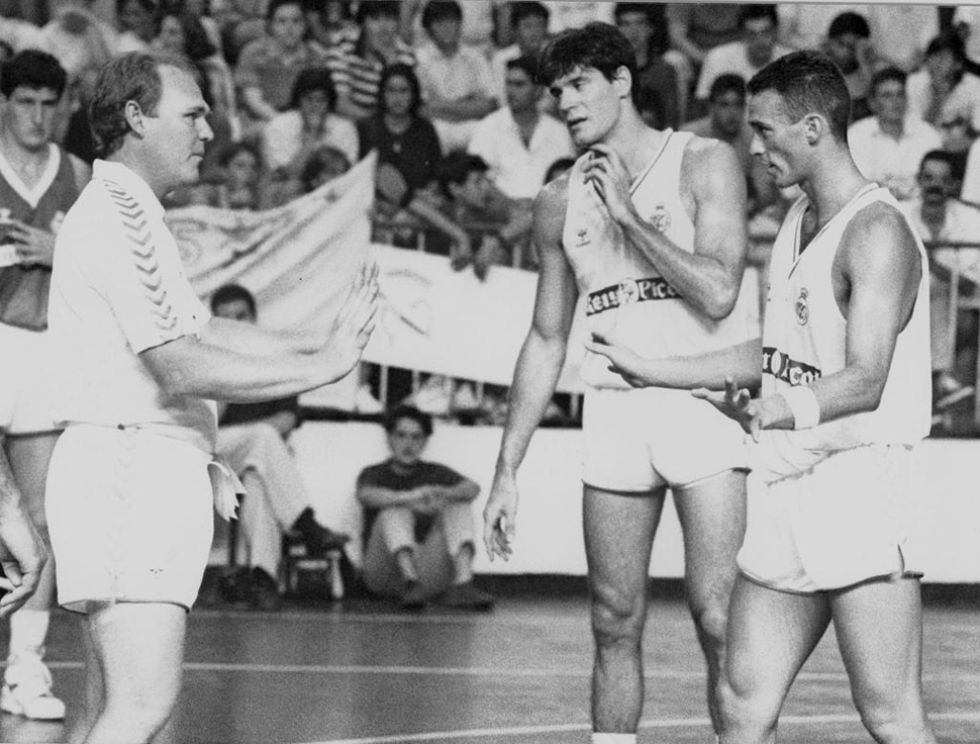
Enough for Real to give him another chance. With no NBA head coaching offers, George agreed to return to Spain for the 1991–92 season, with a significant salary increase of $250,000, more than he had earned with the Warriors.
After Karl’s firing, Real had hired another American, Wayne Brabender, a historic Madrid player from the 1970s, but he was quickly dismissed. His replacement, Ignacio Pinedo, suffered a heart attack during a game and died after being placed in a coma at age 66. A grim alignment of circumstances for George.
The Madrid players were delighted, positively marked by their year with the American coach, and likely bonded by Fernando’s tragic loss. This time Madrid won the European Cup Winners’ Cup against Dušan Ivković’s PAOK, but still did not win the league. Relations with the local press and club president Ramón Mendoza deteriorated quickly. Perhaps returning to Spain had been one move too many for George and his family. San Antonio, Great Falls, Cleveland, Oakland, Albany, Madrid, Albany again, Madrid again. Eight addresses in eleven years.
Karl was losing hope of returning to the NBA, and homesickness set in. In his two seasons in Spain he did not learn the local language, and although his family liked Madrid, the uprooting was felt. If returning to the United States meant becoming an assistant or a college coach, so be it. Bulls GM Jerry Krause did call him in early January 1991, but not to offer a job, rather to ask his opinion on two European players he was scouting, Arvydas Sabonis and Toni Kukoč.
But just before the end of the 1991–92 season, a second call proved decisive. To the great dismay of his players, but with relief for the front office and president Mendoza, Karl left, allowing his assistant to finish the season, to pursue his ultimate goal.
Next chapter, well known, would be written in Seattle with the SuperSonics.
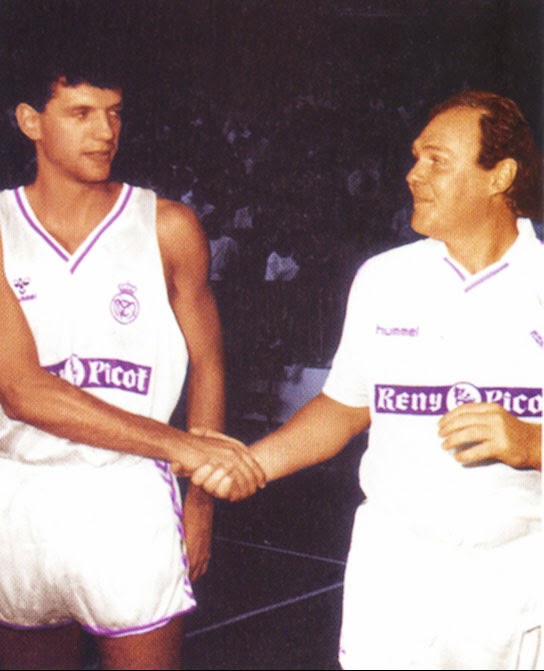
Bonus: The Dražen Petrović episode
In Madrid, George briefly coached Dražen Petrović during a six-week training camp, just before Petrović’s departure for the NBA and the Portland Trail Blazers in late 1989.
Dražen left his American coach his own car, which was not a Lada 2101 but a Porsche. The Croatian star would meet a similarly tragic end to Fernando Martín four years later in a terrible accident on a German highway.
George Karl: Real Madrid record
First stint (1989–1990)
Cup Winners’ Cup: Finalist, lost to Virtus Bologna
Liga ACB: 3rd place
Copa del Rey: Semifinalist
Second stint (1991–1992)
Liga ACB: Left mid-season, team finished runner-up under Clifford Luyk
Cup Winners’ Cup: Champions vs PAOK (65–63), trophy won after his departure
 Deep Bench Chronicles
Leave a comment