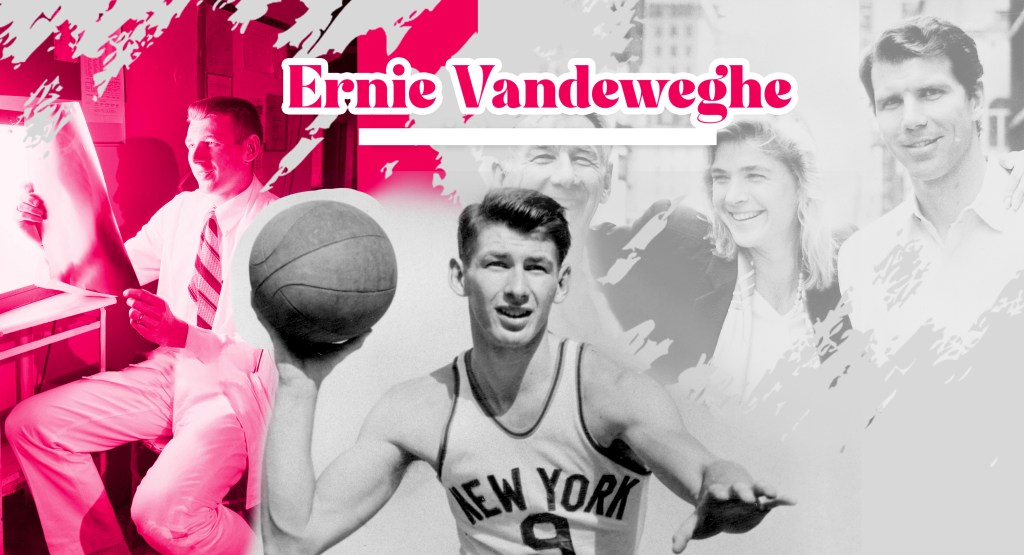
An exceptional life spanning medicine and the NBA
While the rest of us, ordinary men of little importance, go through life trudging along in quiet mediocrity, our greatest achievement being the simple act of inhaling oxygen and exhaling carbon dioxide for seven or eight decades, there exists a rare breed of elite individuals capable of making even the most accomplished among us look ordinary.
Ernie Vandeweghe was one of them. First, a quick note on pronunciation, counterintuitive for anyone unfamiliar with Flemish names: Vane-de-way. A New York Knicks player in the 1950s, a physician, and the patriarch of a family of accomplished athletes, with his wife Colleen Kay Hutchins, with whom he had two sons and two daughters.
Start with Colleen
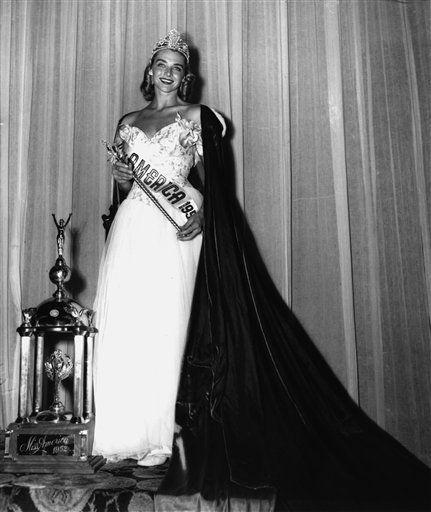
Let us begin with her. Miss America 1952, Colleen Kay Hutchins was the sister of Mel Hutchins, one of the early star players of the Pistons, who enjoyed a fine NBA career. Rookie of the Year in 1952 and a four time All Star, he passed away in 2018. The model from Utah, a regular presence at her brother’s games, met Ernie in 1953 during a game between their teams at Madison Square Garden.
Ernie followed a similar path to the former Bulls center, Bill Wennington: born in Montreal in 1928, moved to New York, more precisely to Long Island, and then an NBA career. Three similarities, but very different paths. While he hesitated between basketball and soccer, which his father Ernie Sr. had played, his 6-foot-3 frame gave him a clear advantage in this emerging sport.
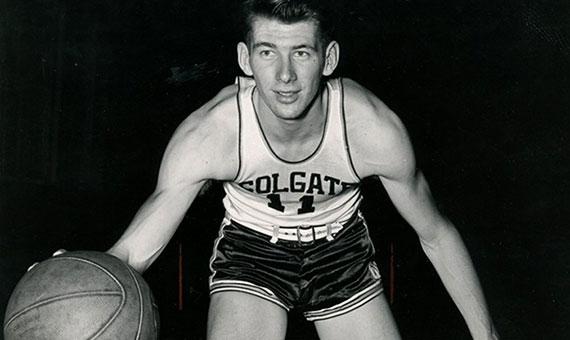
In New York, Ernie attended Colgate University, where he became the school’s first-ever All-American, in 1947, 1948, and 1949. His number 11 jersey has since been retired. He was later drafted in 1949 by the Knicks, at a time when the league was still the BAA, not yet the NBA.
Ernie Vandeweghe, the Basketball Player
His style of play? I was not there, and neither were you. Some video footage does exist. There’s no need to overinterpret it, but still.
I was able to watch two Knicks games from 1950, both against the Fort Wayne Pistons, in decent quality, available on YouTube. There are a few others as well, some even colorized. What stands out is an Ernie who was everywhere on the floor, never shy about throwing a few well placed hits. Beyond that, we are left with stat lines, which must be viewed in the context of the era. If strict empirical standards were applied to the NBA of the 1950s, the league would have vanished into oblivion long ago.
Ernie Vandeweghe was a 6-foot-3 shooting guard and small forward who, during his best season in 1951–52 season, averaged 12 points and nearly 6 rebounds in 29 minutes per game. He was one of the most accurate shooters of his time. In that same 1951 to 1952 season, with a field goal percentage of 43.5 percent, he ranked sixth in the league and was the second most efficient guard, behind Bill Sharman. This was the 1950s, a decade in which no player would reach 50 percent shooting, not even the big men. Neil Johnston, Larry Foust, Ed Macauley, George Mikan.
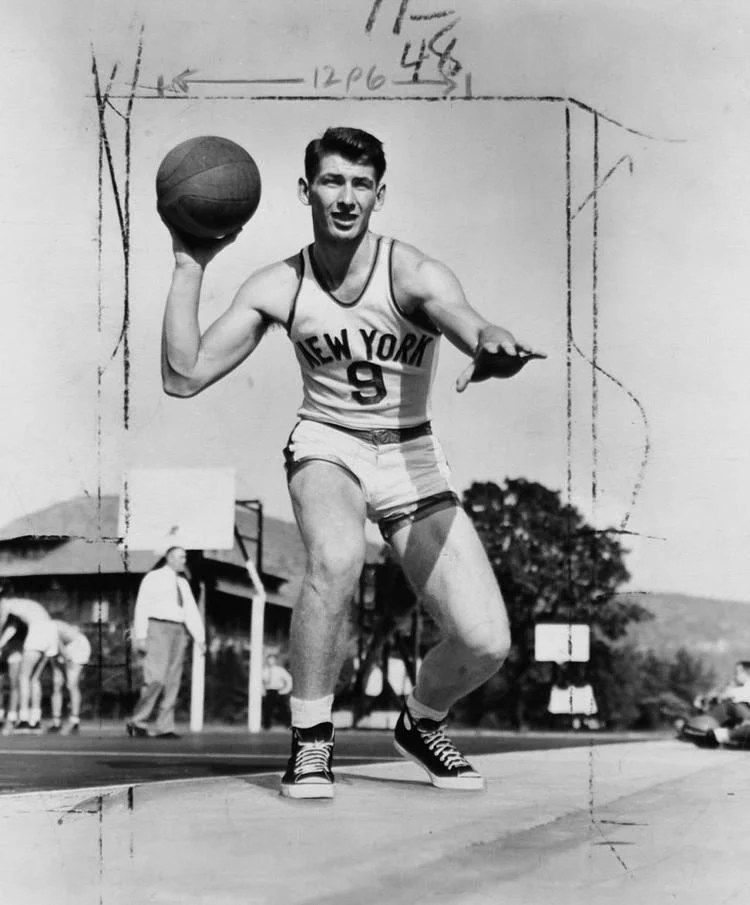
“Vandy,” as his teammates called him, described himself as a pest: “I was very active on the floor. I bothered everybody. I was the kind of guy who annoyed everyone.”
And that is exactly what comes through when watching the few available games of Ernie and the Knicks of the 1950s. Activity. More broadly, the enthusiasm of these early days of professional basketball is a joy to watch. Activity, enthusiasm, natural ball movement, sloppiness, physical play, very little dribbling, shots taken from just about anywhere. The pioneers of the league look perpetually hungry, as if they are simply thrilled to be playing basketball at all, like a pack of golden retrievers in a ball pit.
With the Knicks, Ernie was usually a bench player, backing up his former Colgate teammate Carl Braun, as well as Dick McGuire, both future Hall of Famers. Coached by Joe Lapchick, New York reached the NBA Finals three times, in 1951, 1952, and 1953, losing each time. Ernie was part of that run. From 1949 to 1956, he wore the Knicks jersey in more than 200 games during the franchise’s earliest years in the NBA, after three seasons in the BAA. But like many players of that era, Ernie made sure to secure his financial future, keeping a white coat within reach.
Medical Intern by Day, On the Court at Night
Unlike the impostors known as “Dr. J” or “Doc Rivers”, who are about as much doctors as they are Guatemalan, Ernie truly earned the title. A thought as well for Darrell “Dr. Dunkenstein” Griffith, who at least had the decency to specify the discipline.
Alongside his early years with the Knicks, Ernie Vandeweghe completed his medical studies at Columbia, later becoming a pediatric intern. Full days dedicated to his degree caused him to miss many practices, as well as road trips for West Coast games.
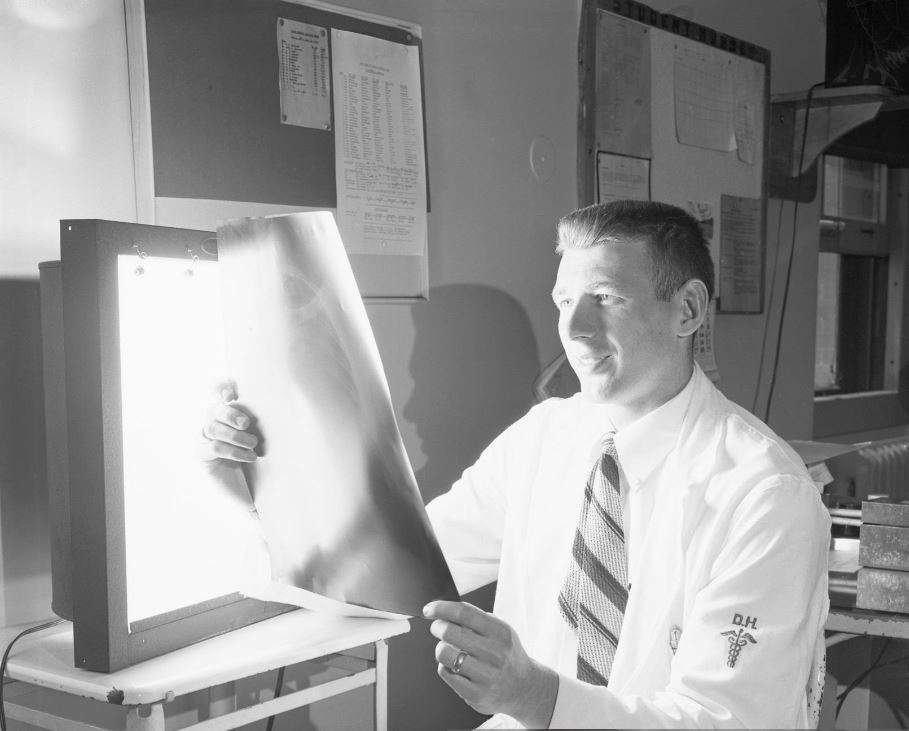
During games at Madison Square Garden, it was not uncommon to see him arrive after tipoff and warm up behind the basket during the first quarter. To stay in shape, Vandy would run to class, even when those classes were located on the 18th floor of Columbia’s medical building. New York eventually adjusted his contract and decided to pay him per game for his final season, at a rate of 100 dollars per appearance.
In his memoirs, Knicks broadcaster Marty Glickman recalled these absurd situations:
He would go to class, then to the lab, and then catch the last possible plane or train to wherever the Knicks were playing. I saw him come onto the court for a game against Indiana with his shoelaces still untied. Coach Lapchick called a timeout. Ernie ran over, tied his shoes, and started playing.
A Life After Basketball in Medicine
After retiring in 1956 due to a knee injury, Ernie, just 27 years old, moved to California and opened a pediatric practice. He later served as a physician for the Air Force at an American base in Germany, where his son Kiki was born. In 1960, when the Lakers relocated from Minneapolis to Los Angeles, he became the team physician for the purple and gold at the request of owner Bob Short. It is also worth noting that Ernie Vandeweghe was responsible for the hiring of the legendary broadcaster Chick Hearn, the voice of the Lakers for 42 years.
A Family of Elite Athletes
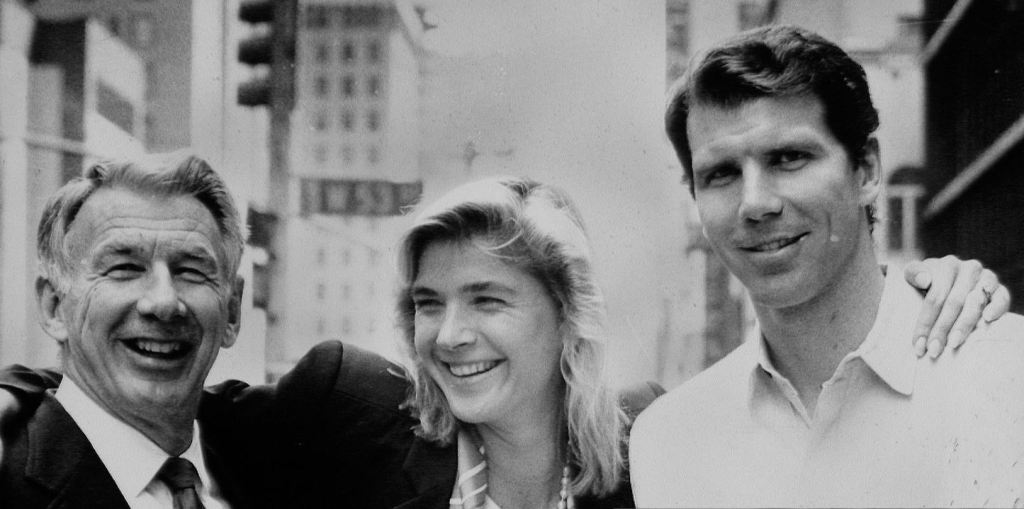
With his wife Colleen, Ernie had four children, two daughters and two sons. A brood of champions, and that is no exaggeration.
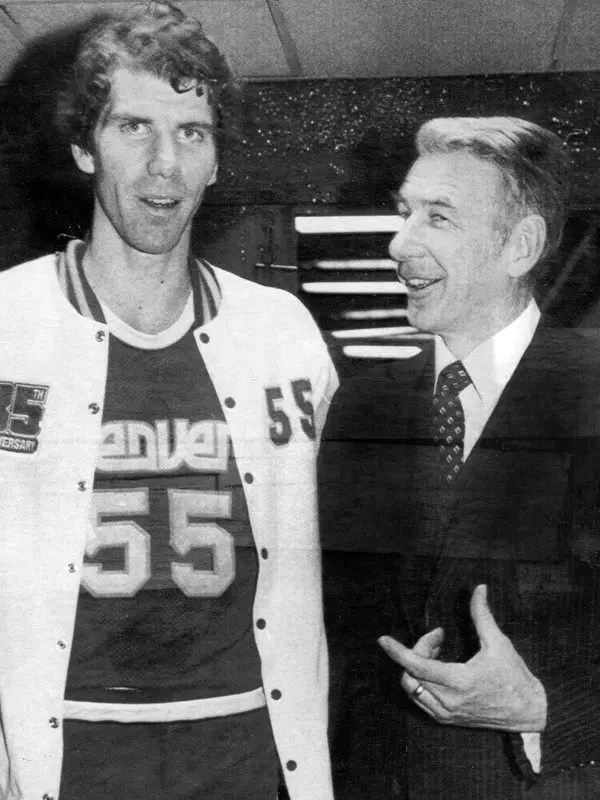
Kiki Vandeweghe is likely the most familiar name. Born in 1958, Kiki first became a star at UCLA before going on to become one of the NBA’s top scorers of the 1980s with Denver and Portland. A fine career highlighted by two All Star selections. In a small twist of history, he would later wear the Knicks jersey as well, from 1989 to 1992. Kiki remained in the NBA world as a front office executive, serving as general manager of the Nuggets and later the Nets during the 2000s.
His second son, Bruk Vandeweghe, competed at a high level in beach volleyball, winning a bronze medal at the 1994 Goodwill Games in Russia, a multi-sport event organized for nearly two decades by media mogul Ted Turner.
The daughters were no less impressive. Tauna Vandeweghe competed at the 1976 Montreal Olympics with the swimming team, her specialty being the backstroke. The younger daughter, Heather, played water polo and even captained Team USA.
Looking one generation further, we find Coco Vandeweghe, Tauna’s daughter and Ernie’s granddaughter. Recently retired from the WTA tour, she reached the world top ten in 2018 and made two Grand Slam semifinals.
In 2014, Ernie passed away at home at the age of 86, four years after the death of his wife Colleen. An extraordinary life, a term often overused, but one that truly applies here. Ernie Vandeweghe lived a remarkable existence, leaving behind a lineage that followed in the path of the physician patriarch.


 Deep Bench Chronicles
Leave a comment